
6 Best Things to Do in Saxon Switzerland National Park (2026 Guide)
Plan Saxon Switzerland National Park: 6 top sights, route and time trade-offs, car-free access from Dresden, what is free, and when to go.
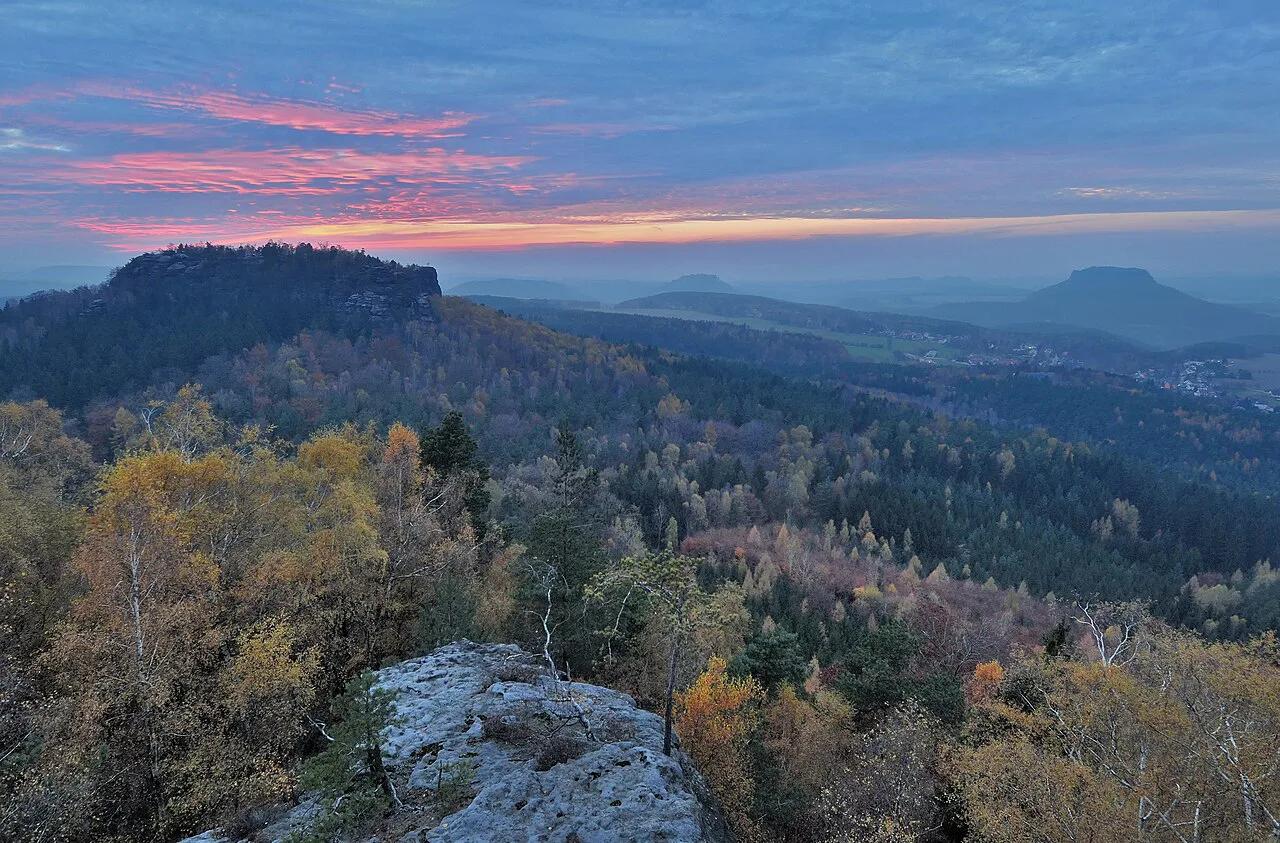
Last updated November 2026: Saxon Switzerland National Park is the German side of the Elbe Sandstone Mountains, about 30 km (19 miles) from Dresden and next to the Czech border. There is no gate and no entrance fee, so you pay only for parking, a few sites and the fortress. Key stops are Bastei, the Schrammsteine, Lilienstein and Bad Schandau, plus Königstein Fortress just outside the boundary.
Featured image: Michael Gäbler, CC BY 3.0, via Wikimedia Commons.
Saxon Switzerland National Park at a glance
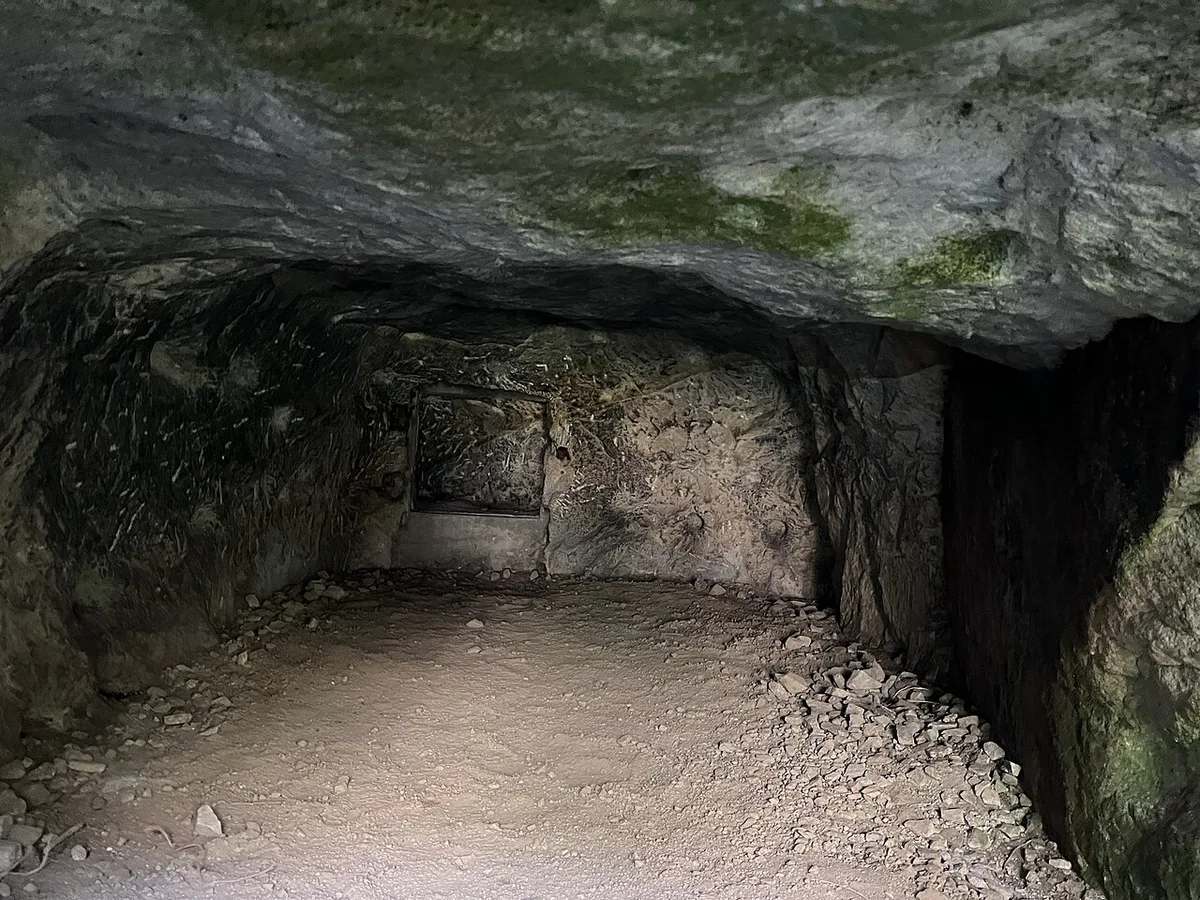
Nationalpark Sächsische Schweiz covers roughly 93 to 94 km² of sandstone pillars, gorges and forest, and published figures differ slightly. The official park site covers access, rules and trails. Bohemian Switzerland National Park lies across the border in Czechia. Trails stay open year-round and there are no opening hours. The park splits into two bases, the Bastei area near Rathen and the Schrammsteine area near Bad Schandau. Prices and hours checked November 2026.
| Fact | Detail |
|---|---|
| Location | Elbe Sandstone Mountains, about 30 km from Dresden |
| Area | Roughly 93 to 94 km² |
| Entry | Free, no gate |
| Neighbour | Bohemian Switzerland National Park, Czechia |
| Two bases | Rathen (Bastei) and Bad Schandau (Schrammsteine) |
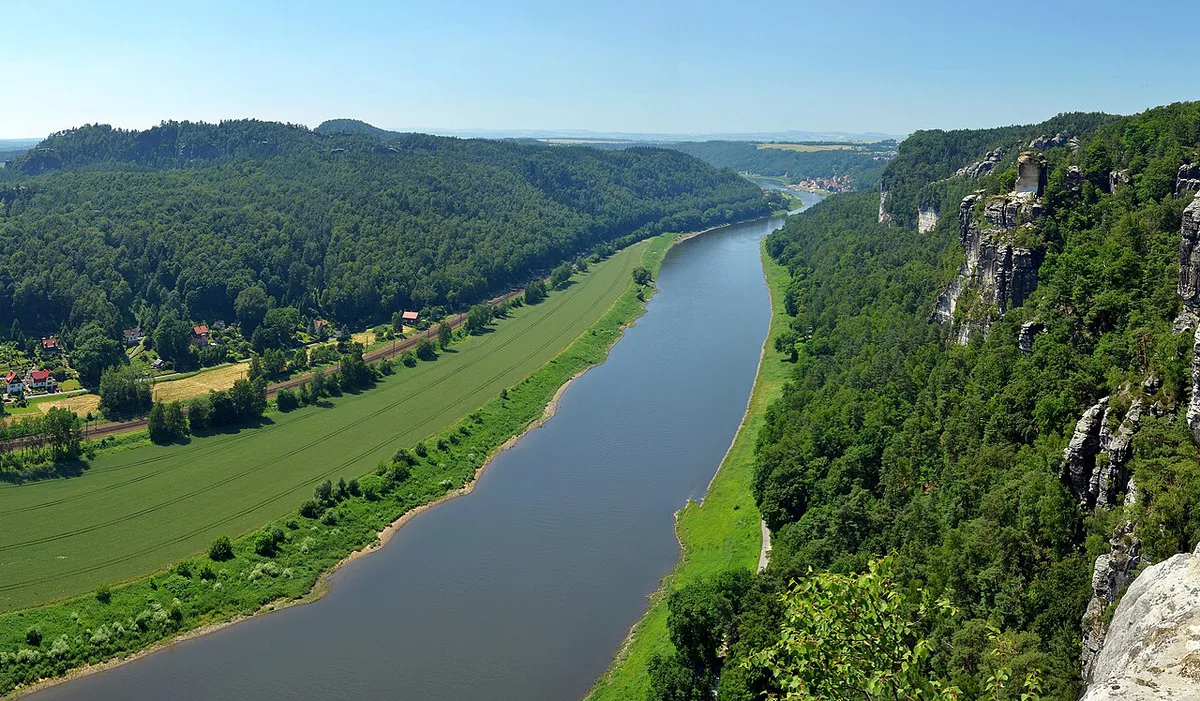
The sandstone continues south into the Czech Republic as Bohemian Switzerland, and similar rock labyrinths appear at Poland’s Table Mountains National Park.
6 Best Things to Do in Saxon Switzerland National Park
These six stops cover both halves of the park. Five sit inside it, and Königstein Fortress is an adjacent add-on.
1. Bastei and Bastei Bridge
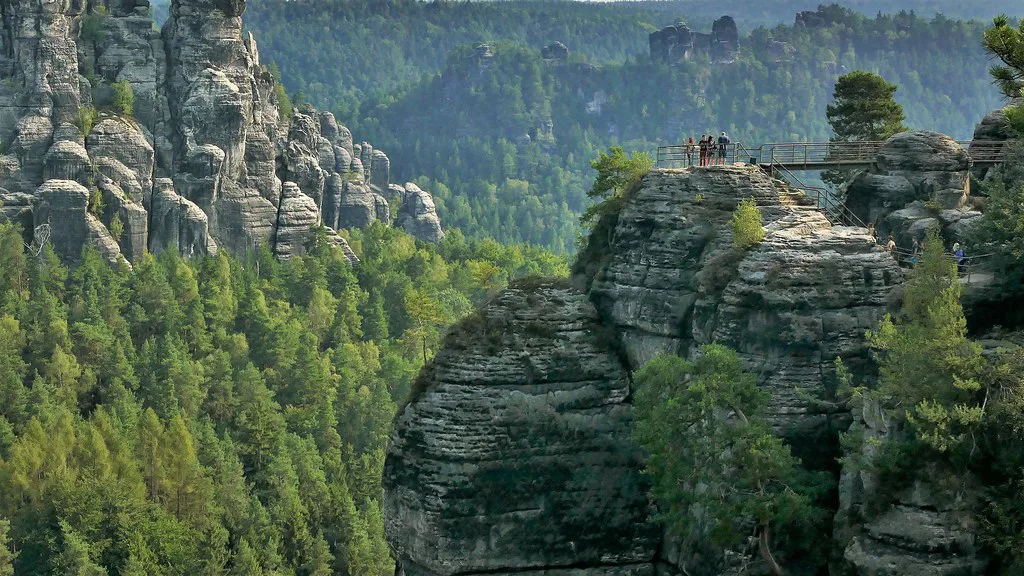
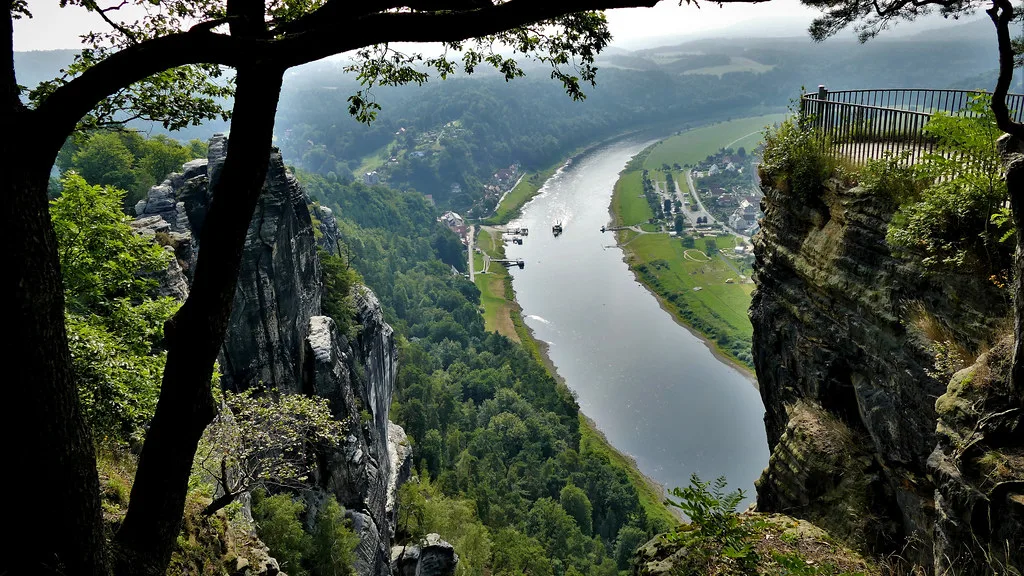
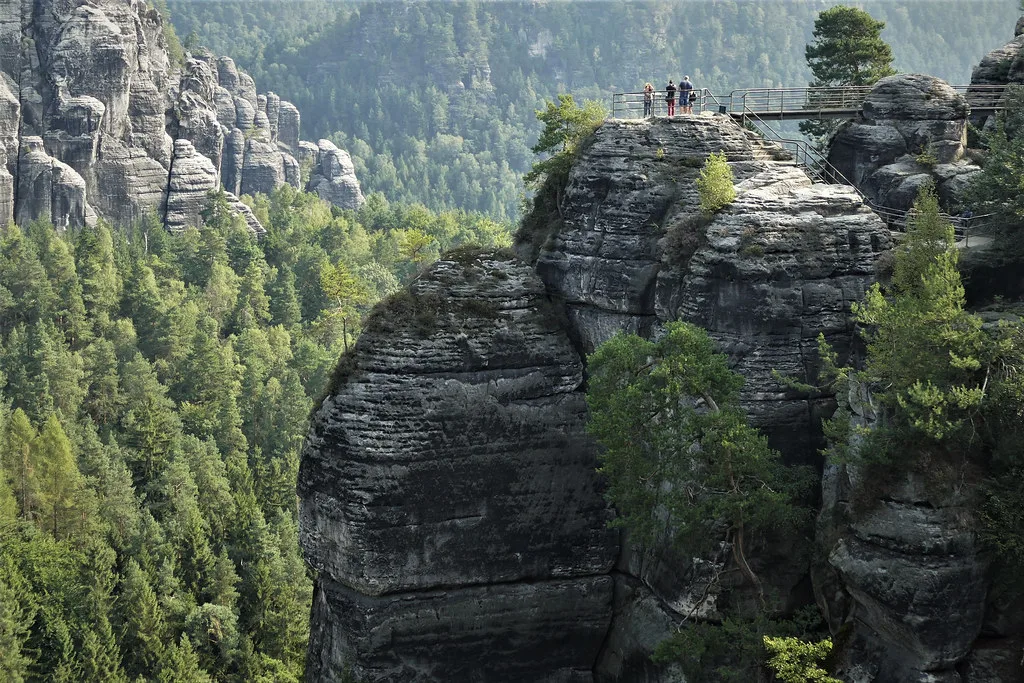
Bastei is the park's best-known viewpoint, a rock outcrop 194 m above the Elbe. A stone bridge built in 1851 links its rock formations, and that bridge is the photo most visitors came for. Reviewers describe about 30 minutes uphill on foot from Kurort Rathen, with stairs along the way.
Beside the bridge, the Neurathen fortress ruin charges a small fee, listed at €3 in an older guide. Drivers pay for parking at the top, and one reported rate is €7 for 4 hours. Skip the midday slot, and read our Bastei Bridge guide for viewpoint detail.
2. Schrammsteine
Schrammsteine is a ridge of sandstone rock in the Bad Schandau half of the park. It earns a spot because you reach it from a different base than Bastei, so one trip covers both sides of the park. Trails here follow steep, rocky forest paths, so smooth-soled shoes are a mistake.
Treat it as a separate outing from Bastei, since the two areas do not share an entrance. Routes and viewpoints are in our Schrammsteine guide. Pass on it if you have one short window from Dresden and want the easiest first walk, because Bastei suits that better.
3. Lilienstein
Lilienstein is a flat-topped table mountain, the kind of landform the park is known for. Climb it for a view across the Elbe valley from a summit rather than from a bridge. Expect steep, rocky sections on the way up, so carry water, food and shoes with real grip.
It works well as the second walk of a two-day stay, once Bastei is done. Route notes are in our Lilienstein guide. Avoid it if stairs and rough ground bother your knees, and choose a gentler valley walk instead.
4. Kurort Rathen
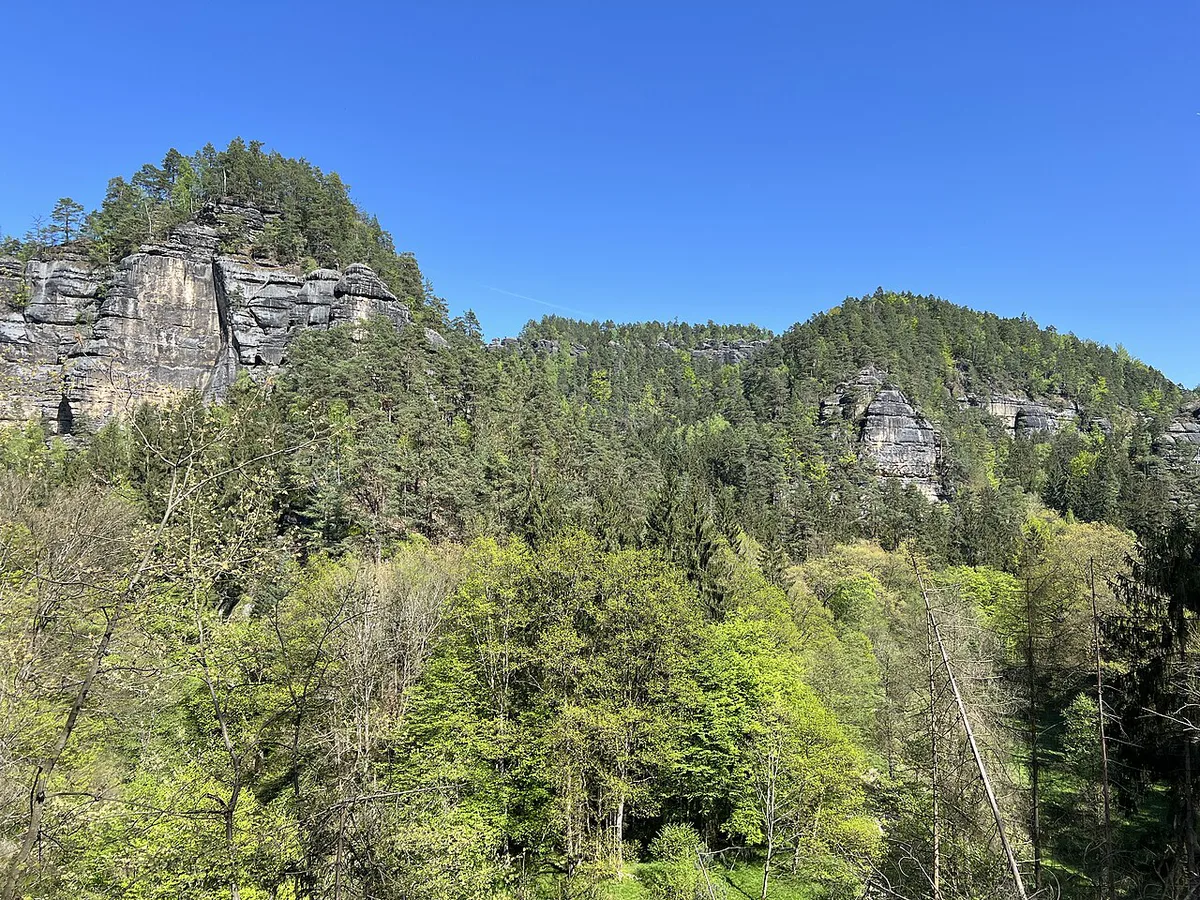
Kurort Rathen is the Elbe village where most car-free visitors start, on the S-Bahn S2 line toward Pirna. From here, reviewers report a 30-minute uphill walk to Bastei Bridge. An overnight stay lets you reach the bridge before the day-trip crowds.
Felsenbühne Rathen, an open-air stage, lists its programme on its own site. Crossing the Elbe at Rathen depends on the ferry operator, so check current times before planning a loop. Our Kurort Rathen guide covers the village. Choose another base if you want the Schrammsteine side.
5. Bad Schandau
Bad Schandau is the park's main base on the Schrammsteine side. Choose it when Schrammsteine and the Elbe valley are your priorities rather than Bastei. The town's own tourism page lists lodging and local events.
The park also runs a paid NationalparkZentrum visitor centre, described on the official park site. Read our Bad Schandau guide for the town itself. Look elsewhere if sunrise at Bastei is the whole point of your trip.
6. Königstein Fortress (adjacent to the park)
Königstein Fortress stands on a table mountain just outside the formal park boundary, so treat it as an add-on rather than a park entrance. It overlooks the Elbe, about 16 km from Bastei, and its walls give views back over the park. An older listing quoted €12 for late May to October and €10 for November to March, and the official fortress site has current prices.
A dedicated car park lies about 800 m from the fortress. History details such as the well and garrison church are in our Königstein Fortress guide. Give it a miss if you want pure trail time and little else.
Which route fits you?
Hikers report 45 to 60 minutes to reach the top of the main viewpoints, and Bastei is about 30 minutes uphill from Rathen. Beyond that, effort depends on your base and your shoes. This table shows how the four main routes compare.
| Route | Effort | Access | Crowd risk | Best fit |
|---|---|---|---|---|
| Bastei | Moderate, with stairs | S-Bahn S2 to Rathen, or paid car park | Highest at midday | First-timers |
| Schrammsteine | Steep, rocky paths | Bad Schandau base | Early start helps | Confident hikers |
| Lilienstein | Steep climb | Day hike from a valley base | Early start helps | Summit seekers |
| Königstein Fortress | Walking inside the walls | Car park 800 m away, or village access | Higher on dry weekends | History fans |
How to get to Saxon Switzerland National Park from Dresden
Car-free is the easiest option. Take the S-Bahn S2 from Dresden toward Pirna and get off at Rathen, then walk up to Bastei. Check fares and times with VVO or Deutsche Bahn. Our Rathen access notes explain the village layout. Drivers leave Dresden on the A17 toward Prague and can park at Lohmen, where a 2020 listing quoted about €3 for 3 hours or €6 a day. Public transport also runs from the Czech side, since the park borders Bohemian Switzerland. Use our Saxon Switzerland Map: Where Everything Is and Which Map to Use to place each base and trailhead.
Costs and what is free
Entry to the park is free, and the trails need no ticket. Paid items are parking, the Neurathen fortress ruin, Königstein Fortress and the NationalparkZentrum. Figures below come from older listings, so confirm them on the official sites.
| Item | Cost |
|---|---|
| Park entry | Free |
| Bastei parking | Reported €7 for 4 hours |
| Neurathen fortress ruin | Listed at €3 in an older guide |
| Königstein Fortress | Listed at €10 to €12 depending on season |
| NationalparkZentrum | Paid, see the official park site |
Where to stay
Pick your base by the sights you want first. Rathen puts you closest to Bastei for an early start, and Bad Schandau suits the Schrammsteine area. Königstein works if the fortress is your anchor. A Dresden day trip needs no packing and uses the S2, about 30 km each way. Hotel prices change by date, so compare current rates directly.
Königstein sits about 16 km from Bastei, so combining the fortress with a Bastei morning means a separate transfer.
| Base | Best for | Access |
|---|---|---|
| Rathen | Early Bastei visit | S-Bahn S2 toward Pirna |
| Bad Schandau | Schrammsteine trails | Elbe valley base |
| Königstein | Fortress visit | Village near the fortress |
| Dresden day trip | Short itineraries | S2 from the city, about 30 km |
When to go and how to avoid crowds
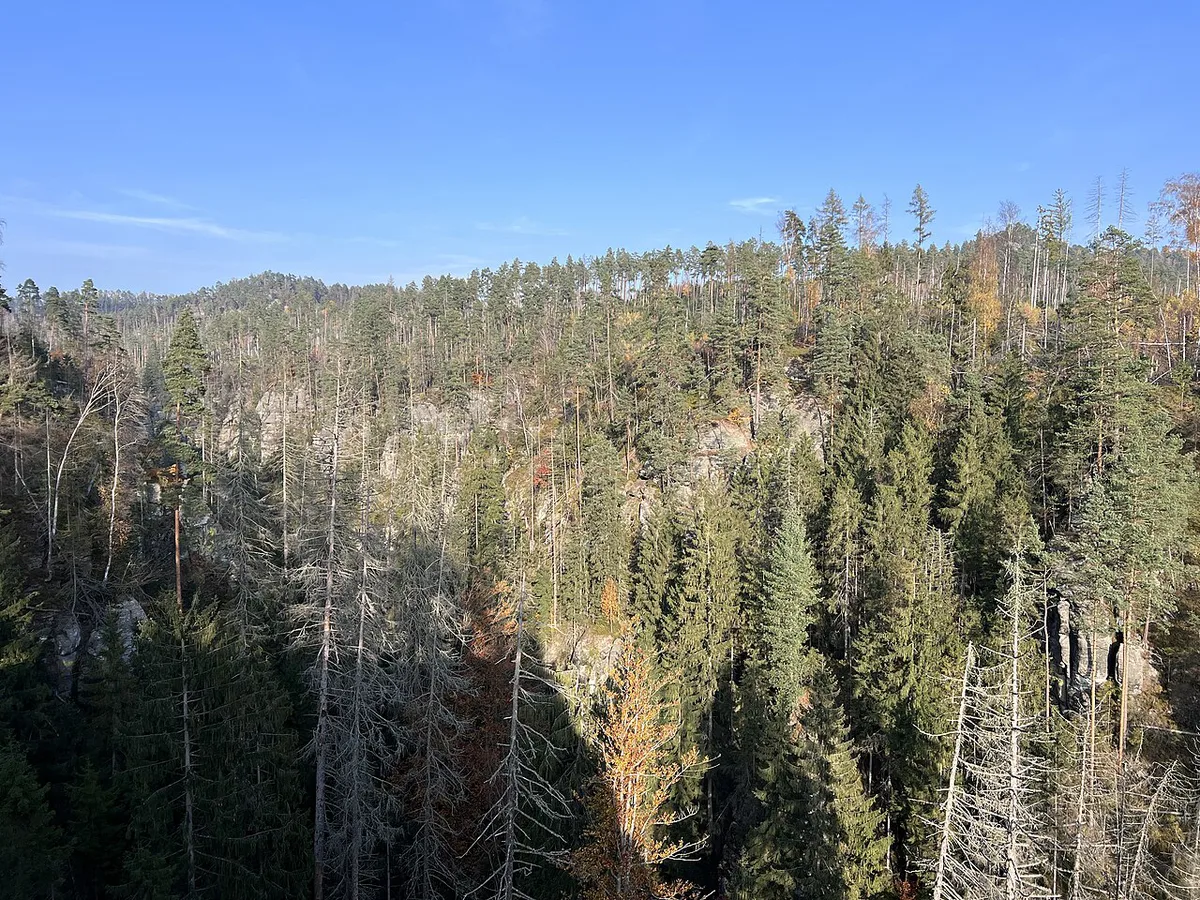
Spring and summer are the common recommendation. One reviewer visited in November 2025, started early in the morning and found it uncrowded. A travel listing showed 2 to 4 °C near the mountains on 21 November 2026, so pack warm layers in winter. Four mistakes cause most bad days. Arriving at Bastei at midday brings the biggest crowds. Smooth-soled shoes struggle on stair and rock sections. Treating the park as one entrance wastes time between the Bastei and Schrammsteine areas. Assuming Königstein Fortress is inside the boundary leaves you without a plan for it.
Sample 1-day and 2-day plans
For one day from Dresden, take the S2 to Rathen and walk to Bastei early. Return before the midday rush, then decide on a second stop. Our Bastei route notes fit that first walk. Two days let you split the park. Spend day one at Bastei from a Rathen base. Move to Bad Schandau for Schrammsteine and Lilienstein on day two, and add Königstein Fortress if you still have time. Use the park map to plan the transfer.
Frequently Asked Questions
Is Bohemian Switzerland worth visiting?
Bohemian Switzerland National Park lies across the Czech border from Saxon Switzerland National Park. If you are already at the border, you can add it, since public transport is reported to run from both countries.
Explore More Guides
Keep planning your trip with these guides.
Guides
Notes for your next park visit
Optional updates to our national park guides.
Read next

Keep planning
Picked from the same area