
Bastei Bridge Guide: How to Get There, Hours and Best Time
Plan your Bastei Bridge visit: train and ferry from Dresden vs car or bus, parking and ruins fees to check, crowds, winter tips and walking times.
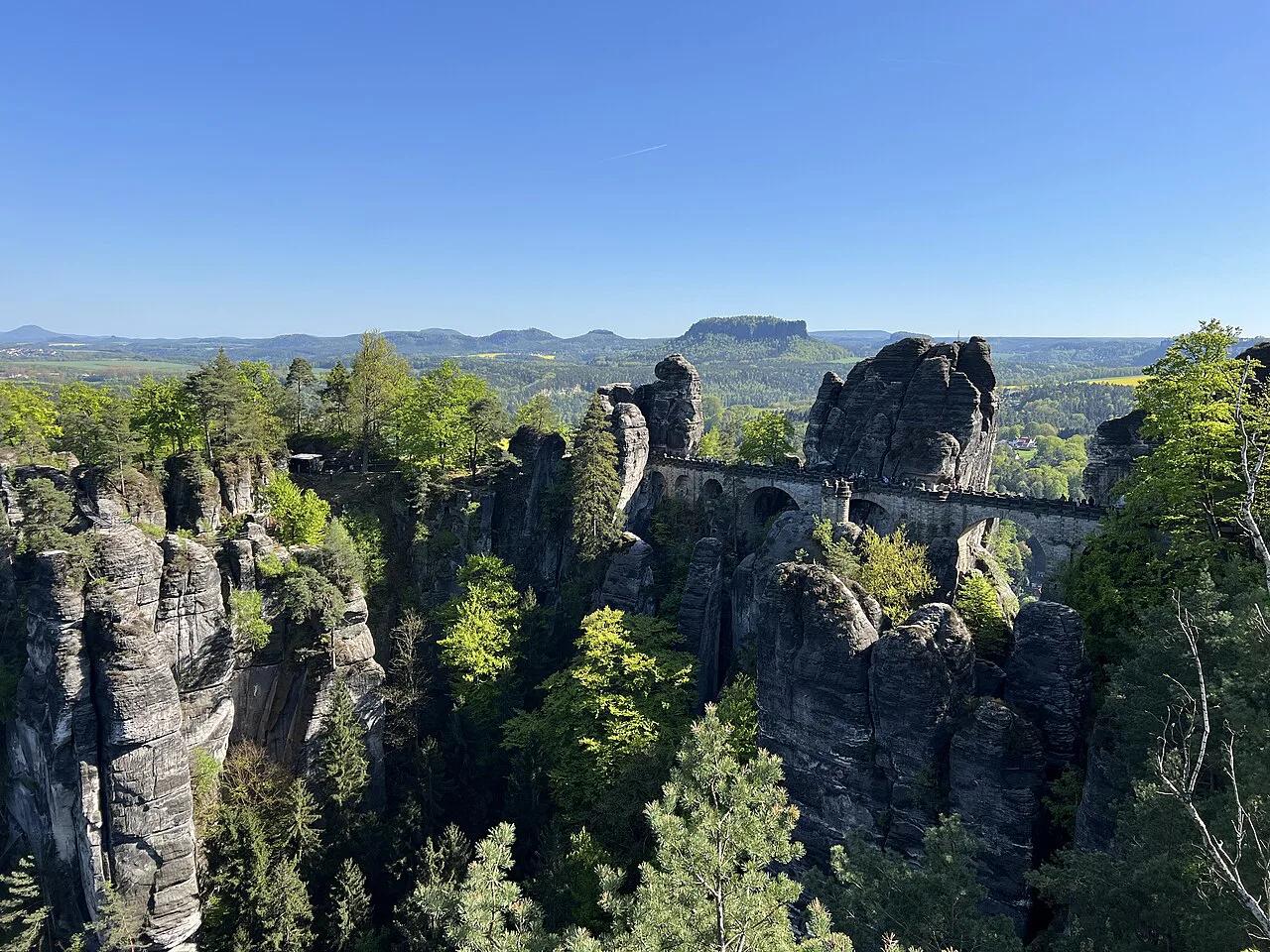
Last updated November 2026, this guide explains how to reach the Bastei Bridge, a sandstone bridge and viewpoint above the Elbe near Kurort Rathen in Saxon Switzerland, Germany. Most visitors take a train from Dresden, cross the river by ferry and climb on foot, while others drive or take a bus to the plateau. Allow about 1.5 to 2 hours for a quick visit, or longer inside the wider 6 Best Things to Do in Saxon Switzerland National Park (2026 Guide).
Featured image: Lukas Beck, CC BY 4.0, via Wikimedia Commons.
Bastei Bridge at a Glance
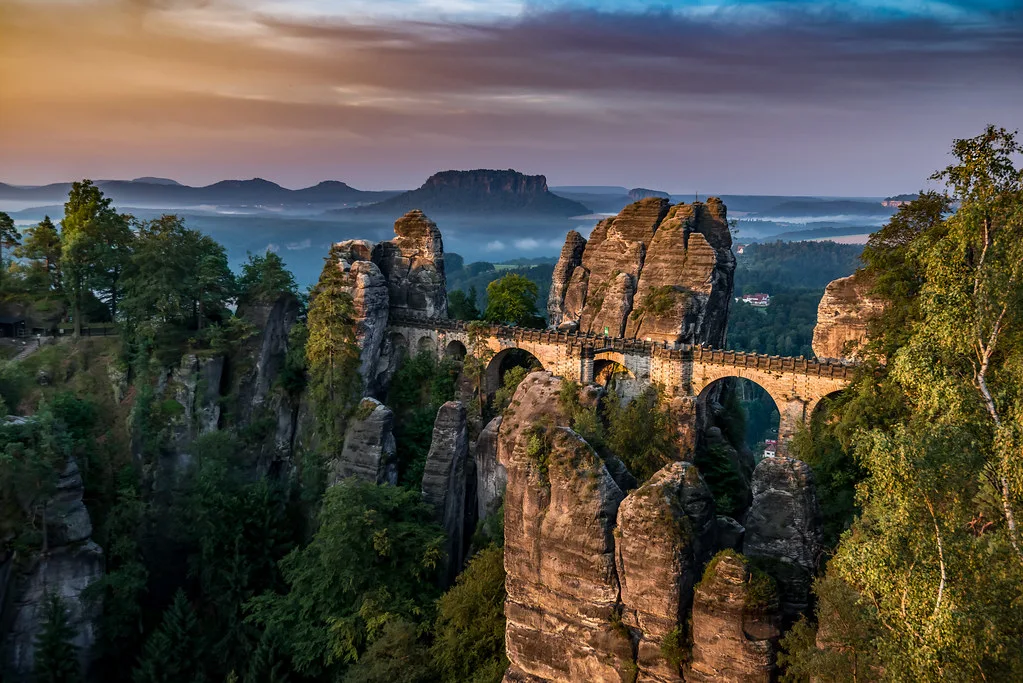
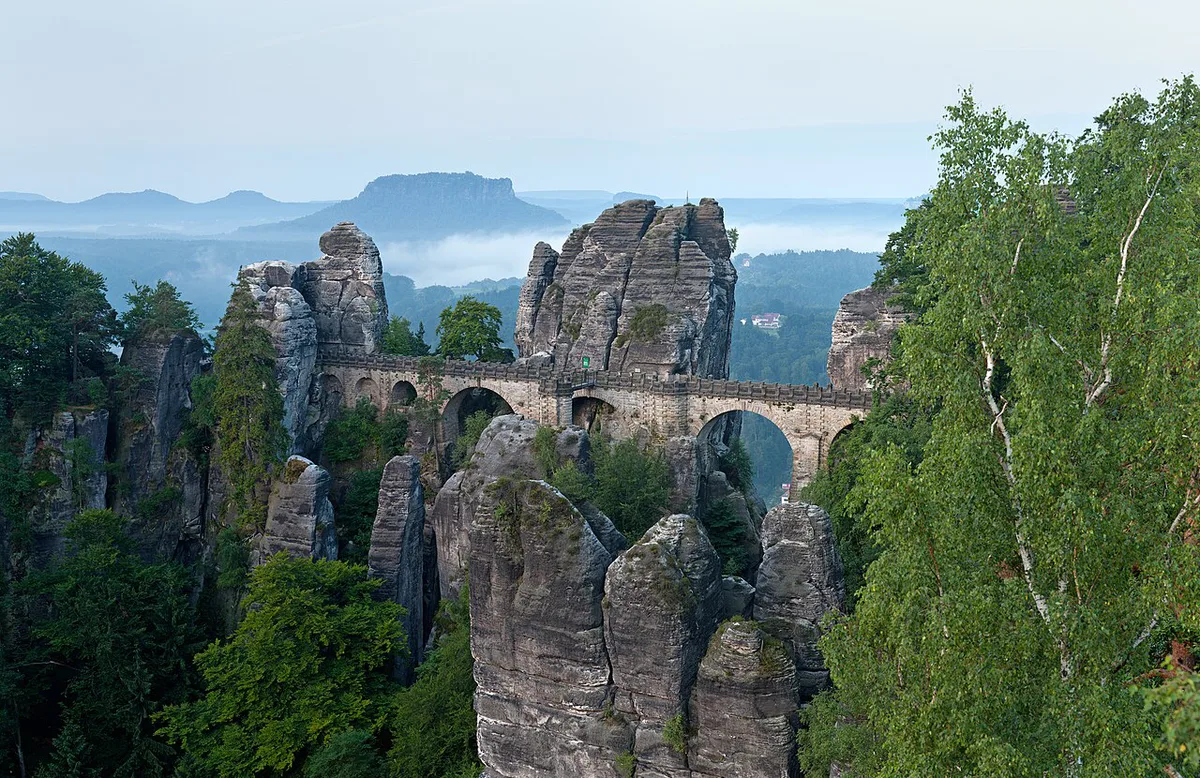
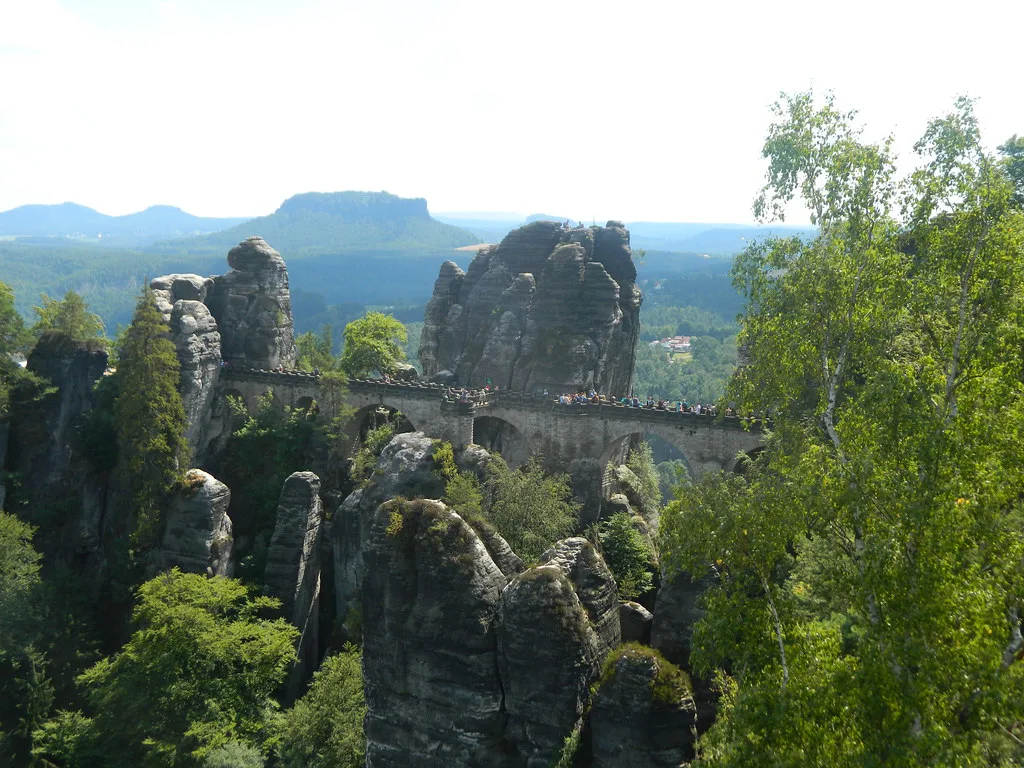
Bastei is a rock formation above the Elbe in the Vordere Sächsische Schweiz, between Lohmen and Kurort Rathen. Its sandstone bridge crosses gaps between the rock towers, not the river. From the span you look out over the Elbe and the sandstone landscape around it. One account says a wooden bridge was rebuilt in sandstone in 1851 as visitor numbers grew, so treat that date as unconfirmed until the park authority states it. Current access notices are posted by the national park authority.
| Detail | What to know |
|---|---|
| What it is | Sandstone bridge and viewpoint among the Bastei rock towers |
| Where | Between Lohmen and Kurort Rathen, above the Elbe |
| Rail access | S1 train to Kurort Rathen, then the Elbe ferry and a climb |
| Time needed | About 1.5 to 2 hours for a quick visit (estimate) |
| Best light | Early morning, before tour groups arrive |
How to Get to the Bastei Bridge
Four routes reach the bridge, and the right one depends on time, effort and whether you have a car. Most car-free visitors take the train from Dresden to Kurort Rathen village, then cross by ferry. Drivers and bus passengers reach the plateau car park and skip most of the climb. Use the Saxon Switzerland Map: Where Everything Is and Which Map to Use to orient yourself before you choose.
| Route | Effort | Best for | Watch for |
|---|---|---|---|
| Train from Dresden, ferry, climb | Moderate, with stairs | Car-free visitors who want the classic approach | Last ferry and last train back |
| Car or bus to the Bastei car park | Shortest walk | Travelers short on time | Parking charge and midday crowds |
| Hike in from Wehlen | Longest, on foot | Hikers with a free half-day | Trail closures and daylight |
| Base in Bad Schandau | Depends on onward connections | Multi-day stays across the park | Extra travel time each morning |
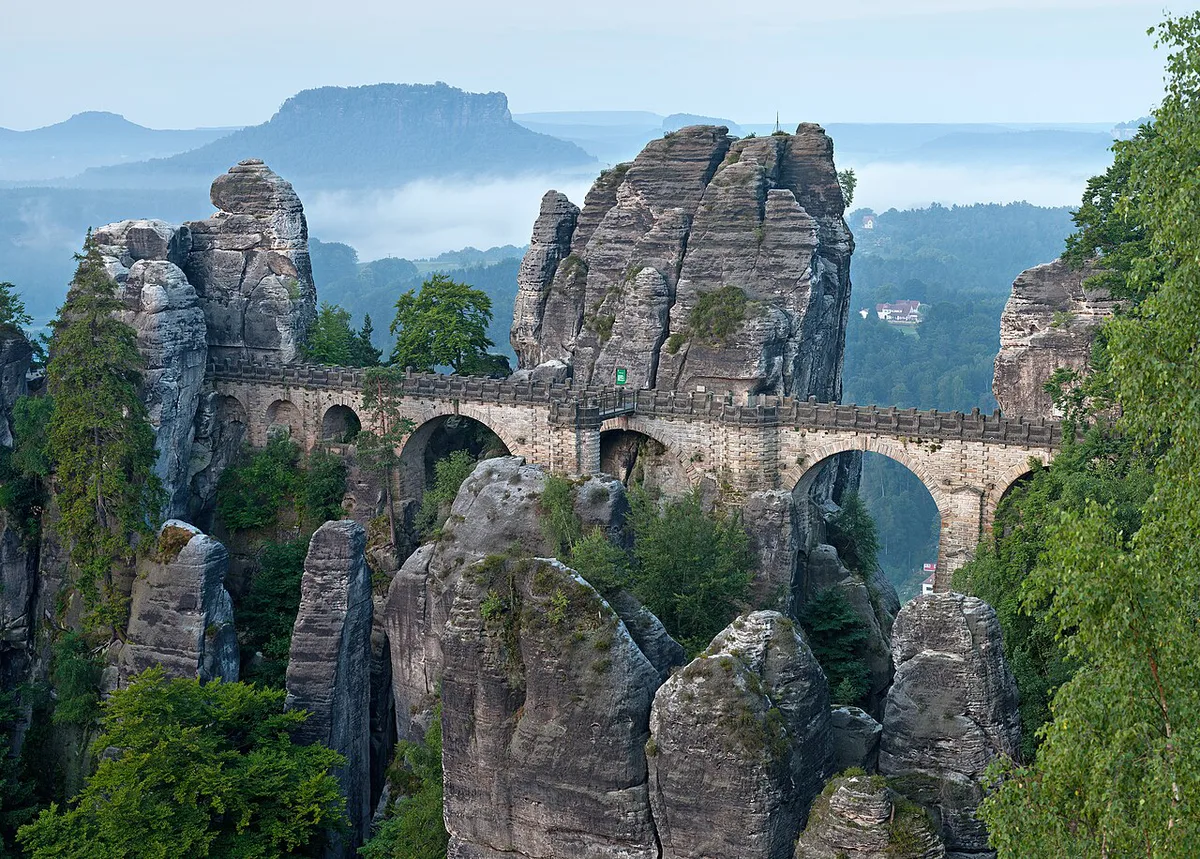
From Dresden Step by Step
Follow these steps for the car-free route. Winter schedules for the S1 and the ferry can differ from summer ones, so check the live timetables before you leave.
- 1. Board the S1 in Dresden and ride to Kurort Rathen.
- 2. Walk to the Elbe landing and take the ferry across the river. Carry euro cash in case cards are not accepted.
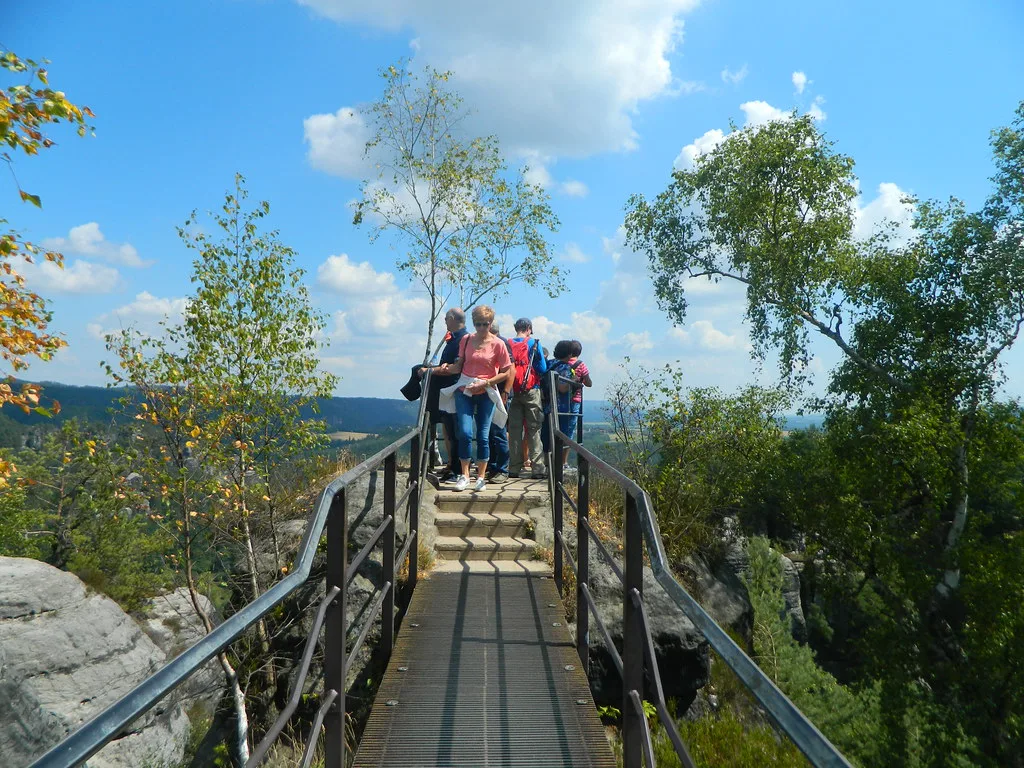
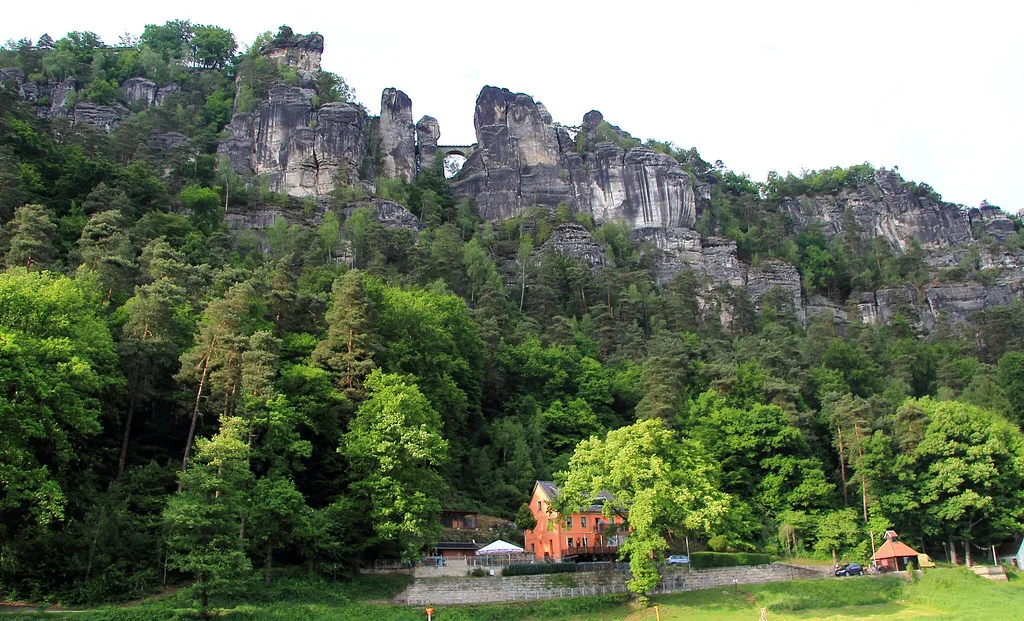
- 3. Climb on foot from the Rathen side up to the bridge. Expect stairs and uneven rock steps.
- 4. Cross the span, take in the viewpoints, then plan your descent.
- 5. Note the last ferry and last train back before you start the climb.
Opening Hours, Tickets and Parking
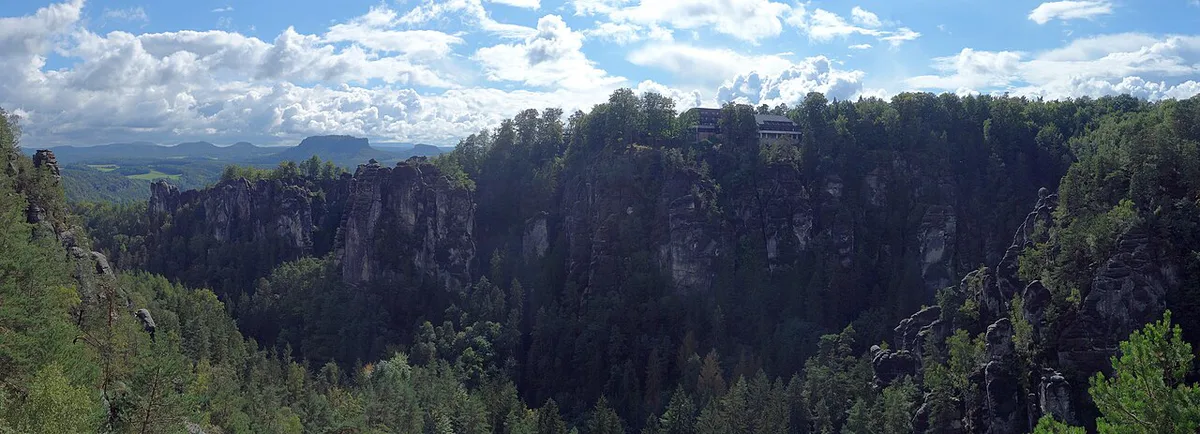
The bridge and viewpoint are an open-air public path, while the car park, visitor centre and Neurathen ruins keep their own hours and charges. Current tariffs and times are listed on the Saxon Switzerland tourism site.
What You Will See and Do
Start with the viewpoints on both sides of the span, where the Elbe bends below the sandstone towers. Neurathen castle ruins sit beside the bridge and work as a separate add-on with their own ticketing. For another sandstone outlook, compare it with another sandstone viewpoint at Lilienstein. A visit to the fortress at Königstein fits a separate day. Evening events at the Felsenbühne Rathen open-air stage keep their own calendar. For a tougher walk, plan a different day on the Schrammsteine hiking route.
Combining Bastei With Dresden Sights on One Trip
Because the car-free route starts in Dresden, many visitors pair the bridge with a city sight. The order matters: the span is best early, so give the morning to the sandstone and the afternoon or next day to the city.
Green Vault in Dresden
The Green Vault, the Saxon rulers' treasury in the Residenzschloss, is the most common city pairing. Entry is by timed ticket, and slots can sell out in busy periods, so book through the Staatliche Kunstsammlungen Dresden before you travel and check the current opening days and prices there. Pick a slot for late afternoon so a delayed S1 or ferry queue does not cost you the entry.
How to schedule it
- Same day: catch an early S1, finish at the bridge and Neurathen ruins, and aim to be back in Dresden with a buffer of at least an hour before your timed entry.
- Separate days: the safer option in winter, when daylight is short and the ferry and train schedules can differ from summer ones.
- Rain plan: if the forecast is poor, swap the order. Do the Green Vault first and keep the bridge for a clearer day, since the viewpoints are the point of the climb.
Berlin and Potsdam sights such as Museum Island or Sanssouci Palace belong to a separate trip. They are too far for a Bastei day, so treat them as a different leg of a Germany itinerary instead of an add-on.
Best Time to Visit and How to Beat the Crowds
Arrive around 7 a.m. to 8:30 a.m. to have the span and viewpoints with far fewer people. Weekday mornings are calmer than weekends and holidays. Midday brings tour groups, so schedule lunch in Kurort Rathen rather than on the plateau. Late afternoon light is softer for photographs, but leave margin for the last ferry.
- Winter daylight is short, so start earlier and finish before dusk.
- Ice can build on the stairs, so wear boots with grip.
- Cafés and ferry services may run reduced schedules, so check ahead.
- Anyone with limited mobility should ask the park authority about access, since the climb is stepped.
Sample Plans
These times are estimates. Add buffer for queues at the ferry and for photo stops.
| Plan | Time (estimate) | What it covers |
|---|---|---|
| Quick visit | About 1.5 to 2 hours | Bridge and main viewpoints, arriving by car park or short climb |
| Half-day | About 3 to 4 hours | Bridge, Neurathen ruins and a short loop from Kurort Rathen |
| Full day | About 5 to 7 hours | Bridge plus longer walks, with lunch in Rathen |
Where to Stay and Base Yourself
Your base decides how early you can reach the bridge. Compare these three options by access and convenience.
Dresden-based trips put the S1 ride and ferry ahead of the 7 a.m. to 8:30 a.m. window, so a Rathen or Bad Schandau base suits early arrivals.
- Kurort Rathen: closest to the ferry and the climb, with limited dinner choice.
- Bad Schandau as a base: more restaurants and a good fit for several park hikes, but a longer trip each morning.
- Dresden day trip: widest choice of hotels and dining, with train times setting your schedule.
Mistakes to Avoid
A few small errors cause most of the stress on this trip.
- Wearing smooth-soled shoes on stone stairs.
- Arriving at midday during peak tour-bus hours.
- Relying on a card at the ferry or café.
- Assuming the car park is free.
- Forgetting to check the last ferry or train back.
Frequently Asked Questions
How long is the hike to Bastei Bridge?
The climb from the Rathen ferry is on foot and stepped. A quick visit including the climb takes about 1.5 to 2 hours. Driving to the car park shortens the walk.
Why was the Bastei Bridge built?
One account says the older wooden bridge was replaced in sandstone in 1851 to handle growing visitor numbers. Accounts of the bridge's history are not all alike; the national park authority has the fuller details.
Notes for your next park visit
Optional updates to our national park guides.
Read next

Keep planning
Picked from the same area