
Arnarstapi, Iceland: Sea Arches & Hellnar Cliff Walk
Arnarstapi guide: Gatklettur arch, the clifftop walk to Hellnar, how long to stay, when to go, and what to do if the wind is up.
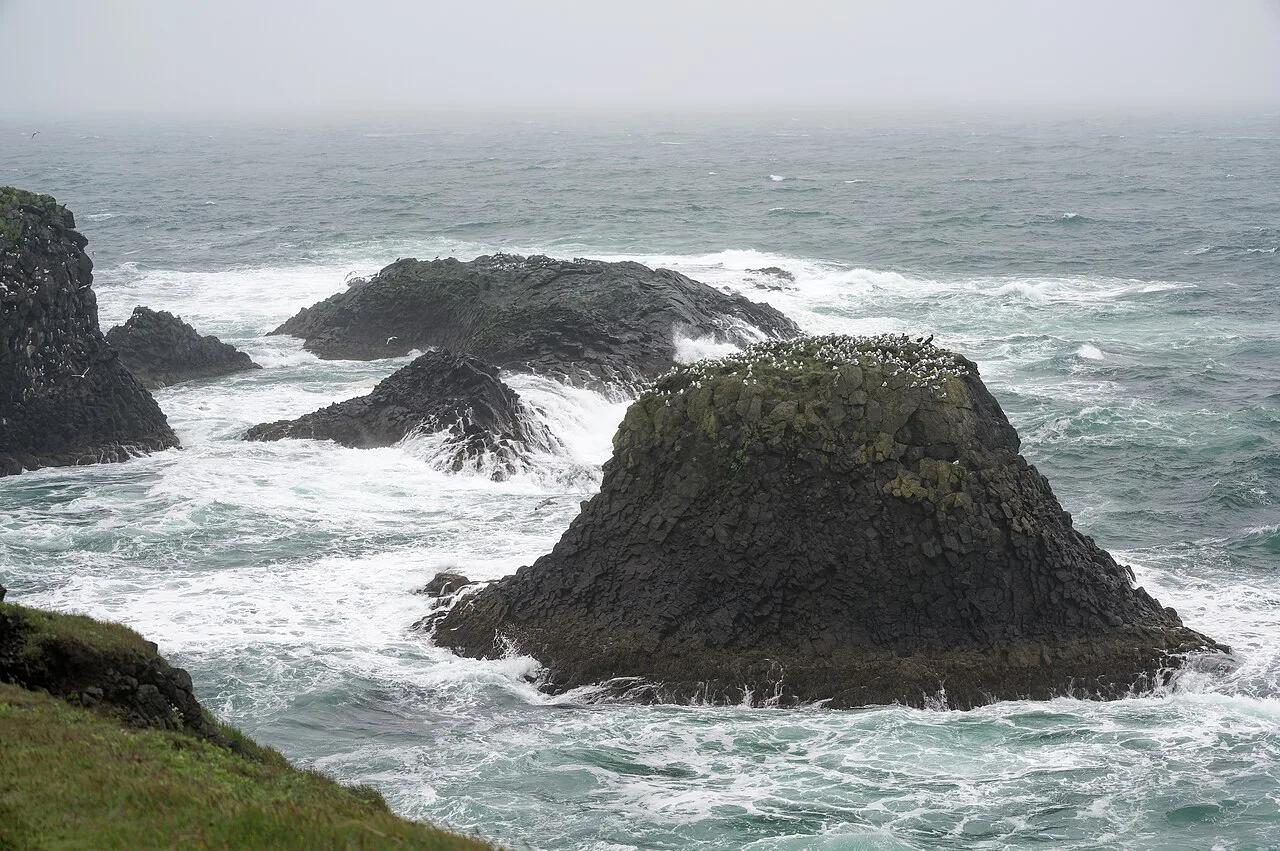
Last updated November 2026: Arnarstapi is a tiny harbour hamlet on the south side of the Snæfellsnes Peninsula, with sea arches and a clifftop path to Hellnar. Plan 20–30 minutes for a photo stop, or 2–3 hours if you walk the coast. From Reykjavík it is roughly a 2–2.5 hour drive, so it fits into a wider day on the peninsula.
Featured image: Jakub Hałun, CC BY 4.0, via Wikimedia Commons.
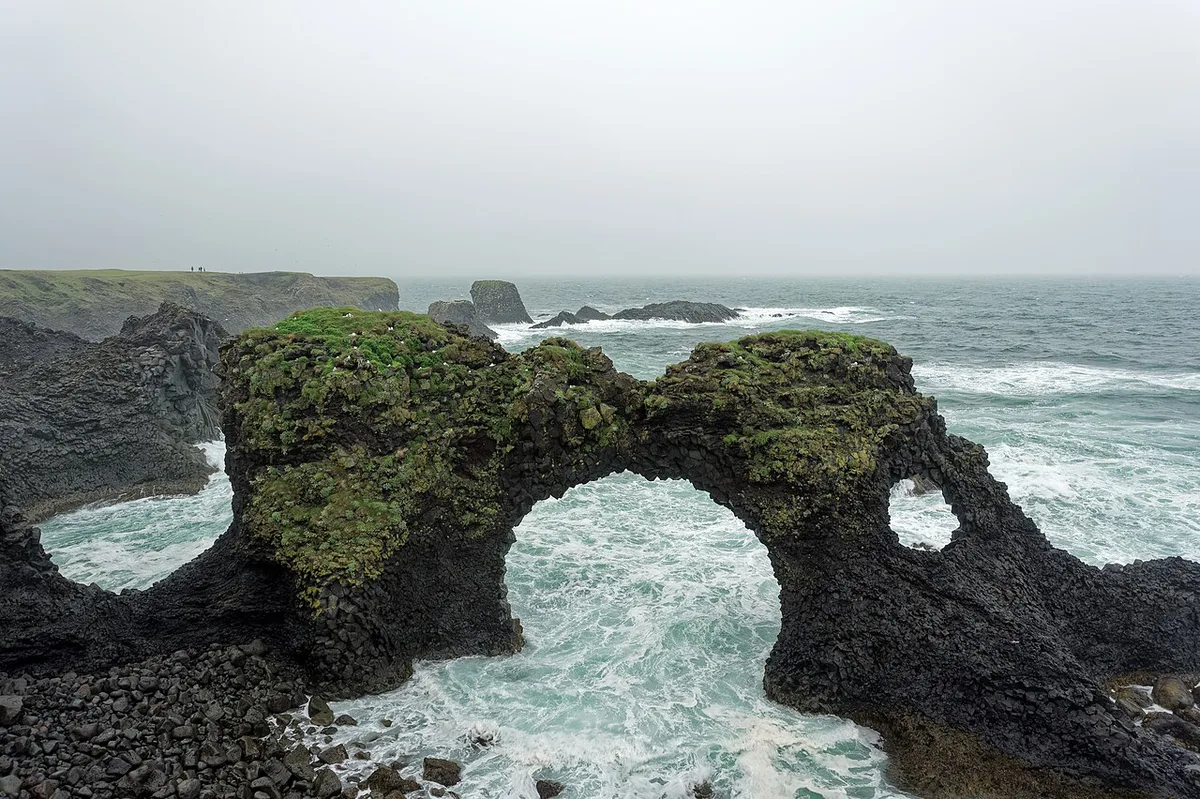
Arnarstapi at a glance
Arnarstapi has a harbour cut into the rock, a stone statue of the half-troll Bárður Snæfellsás, and the circular sea arch at Gatklettur. Hellnar, the next hamlet along, is joined to it by a path of about 2.5 km (roughly 1.6 miles). Expect 2–2.5 hours by car from Reykjavík via Route 1, then Route 54. Hikers, photographers, birdwatchers, and anyone curious about geology get the most from the stop. Drivers short on time can still manage a 20–30 minute visit. For the full loop around the peninsula, use our Snæfellsnes route guide.
Best things to do in Arnarstapi
Everything in the village is within a short walk of the harbour. Each stop below earns its place for a specific reason.
- Gatklettur arch: the circular sea arch is the most photographed spot, and it is hard to miss along the path.
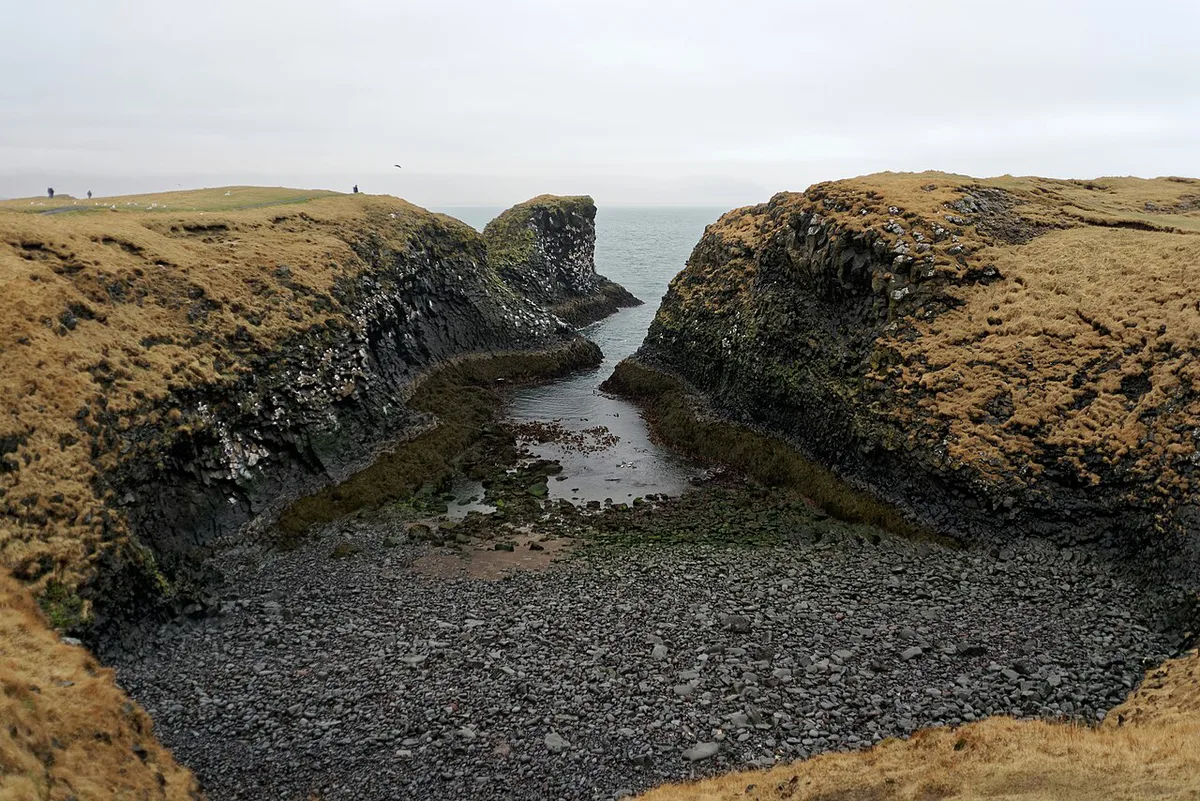
- Lava arches and blowholes: waves surge through collapsed basalt along the shore, so you can watch the sea work on the rock.
- Bárður Snæfellsás statue: the stone figure honours the local saga guardian and makes a quick, free stop by the village.
- Harbour: a small basin cut into the rock, good for seeing how the village sits against the cliffs and mountain behind.
- Cliff birdlife: kittiwake and fulmar colonies use the ledges from May to August.
Bárður Snæfellsás: the saga behind the village statue
The stone figure by the harbour is more than a photo stop. It depicts Bárður Snæfellsás, the title character of Bárðar saga Snæfellsáss, one of the Icelandic sagas. In the story he is the son of a giant father and a human mother, which is why he is usually called a half-troll. The statue is the work of the Icelandic artist Ragnar Kjartansson and is built from local stone, so it blends into the cliffs behind it.
Who he was in the stories
The saga casts Bárður as a settler who made his home under the glacier on the peninsula and later became its guardian spirit. Locals still link the name Snæfellsás with the protective presence of Snæfellsjökull, the glacier-capped volcano that rises behind the village. When you stand at the statue, the mountain is the landmark the legend is about.
How to use the story on the ground
- At the statue: look up the coast toward the glacier on a clear day to see the setting the saga describes.
- On the path: the lava ledges and arches between here and Hellnar are the landscape the saga's trolls and spirits belong to, so the walk reads differently once you know the tale.
- Before you go: English translations of Icelandic sagas are easy to find, and the Bárður saga is short enough to skim on the drive from Reykjavík.
Arnarstapi has also been a working fishing and trading harbour for a long time, which explains the rock-cut basin you see today. The folklore and the working harbour sit side by side, and both take only a few minutes to absorb before you set off on the coastal path.
The Arnarstapi–Hellnar coastal walk
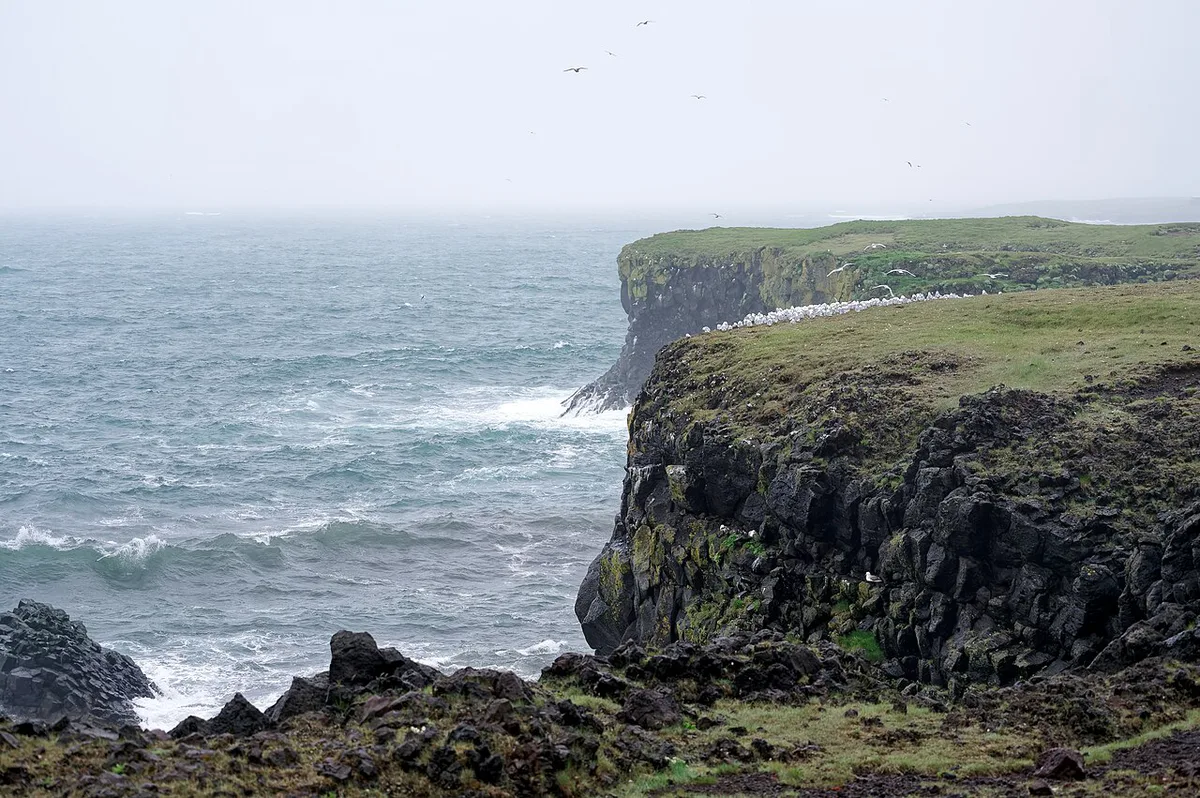
The path between the two hamlets runs about 2.5 km each way over lava arches, blowholes, and sea stacks. It sits inside the protected area of the Snæfellsjökull park region, so stay on marked trails and away from nesting ledges. Footing is uneven lava, and the cliff edges are unfenced in places. At Hellnar you will find the national park visitor centre and a café in a cove. Opening seasons for the centre can change, so check the park's current information before planning a stop there. You can walk one way and arrange a lift back, or walk out and return along the same path. Walking both ways is the simpler plan if you have your own car at Arnarstapi.
How much time to plan for Arnarstapi
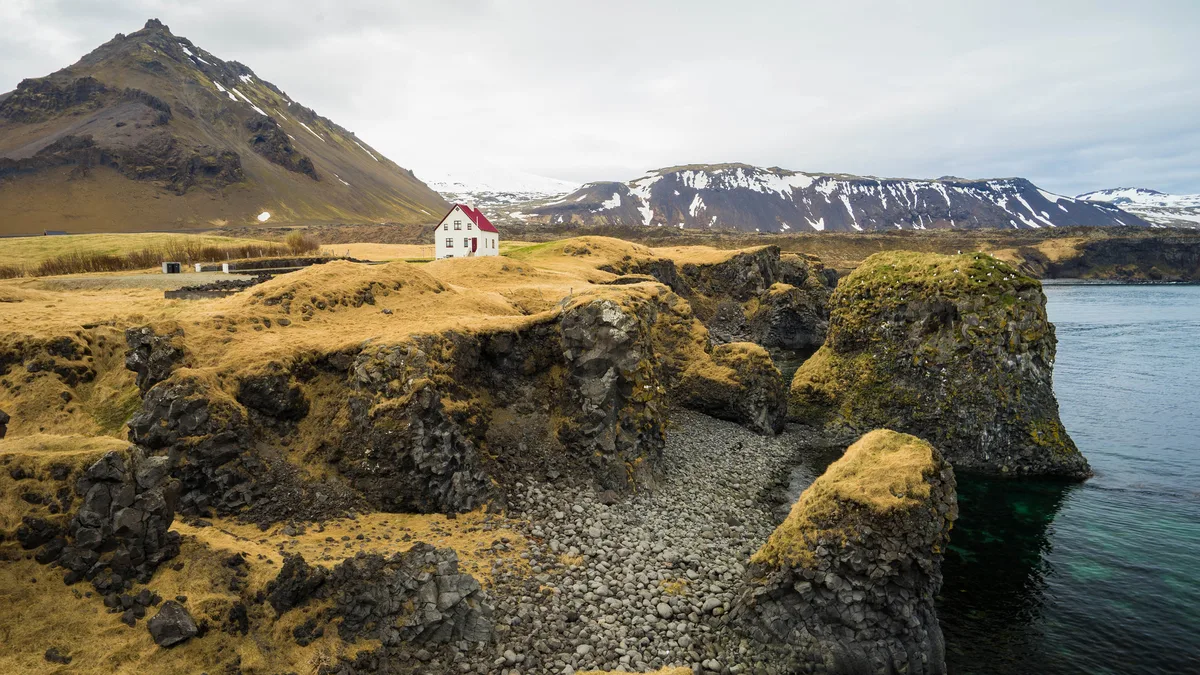
Match your stop to the time you have. A 20–30 minute visit covers the arch and the statue. A full return walk of 2.5 km each way takes the 2–3 hours shown below.
| Time | What you see | Best for | Skip if |
|---|---|---|---|
| 20–30 min | Gatklettur arch, statue, harbour edge | Photo stops on a tight day | You want the cliff path |
| About 1 h | Village, arches, blowholes, short stretch of path | Most day-trippers | You dislike exposed edges |
| 2–3 h | Full path to Hellnar and back, visitor centre, café | Hikers, birdwatchers, geology fans | Wind is strong or you have toddlers |
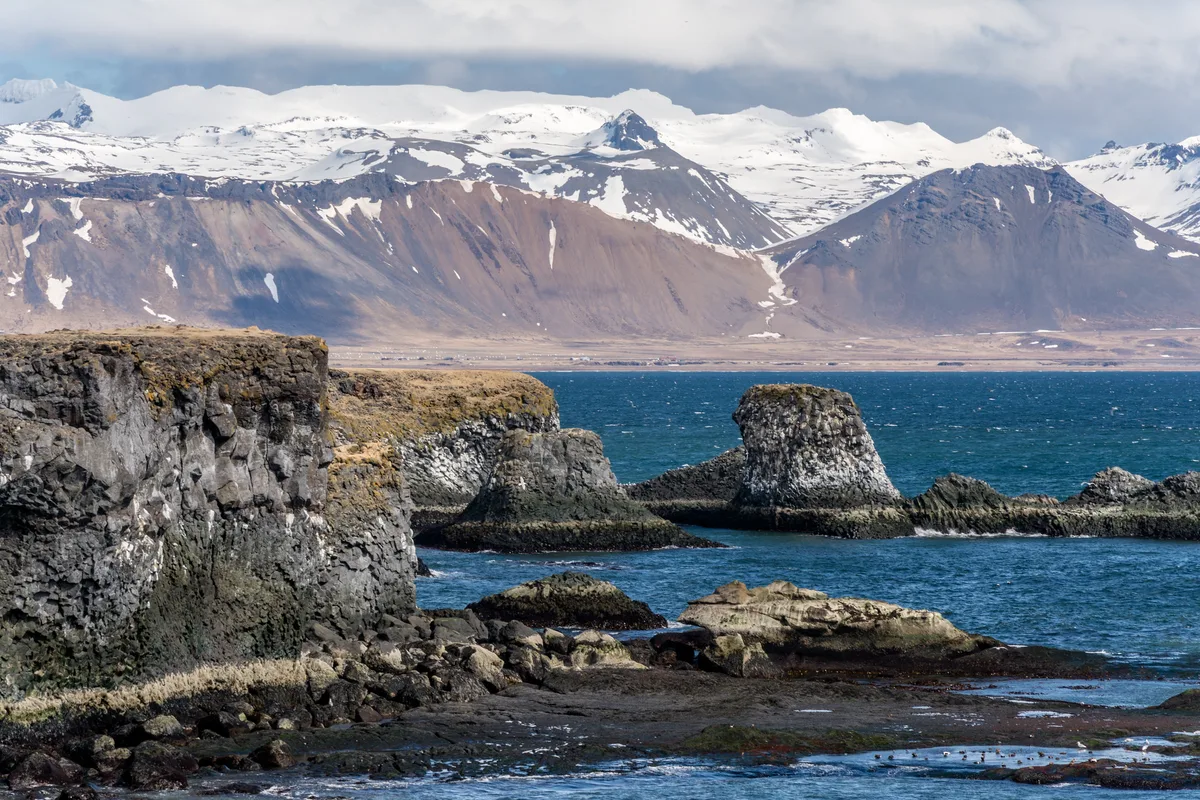
When to go and what wind does to the walk
May to August brings the kittiwake and fulmar colonies to the ledges, and May to September gives the safest footing. Coastal wind can be strong at any time of year. Check the forecast at vedur.is before you set out, and turn back if gusts make the cliff edge uncomfortable. In winter, daylight is short and road conditions on Route 54 can change quickly, so check road.is before driving. On a bad-wind day, shorten your visit to the arch and the statue and skip the exposed stretches of path.
Getting there and getting around
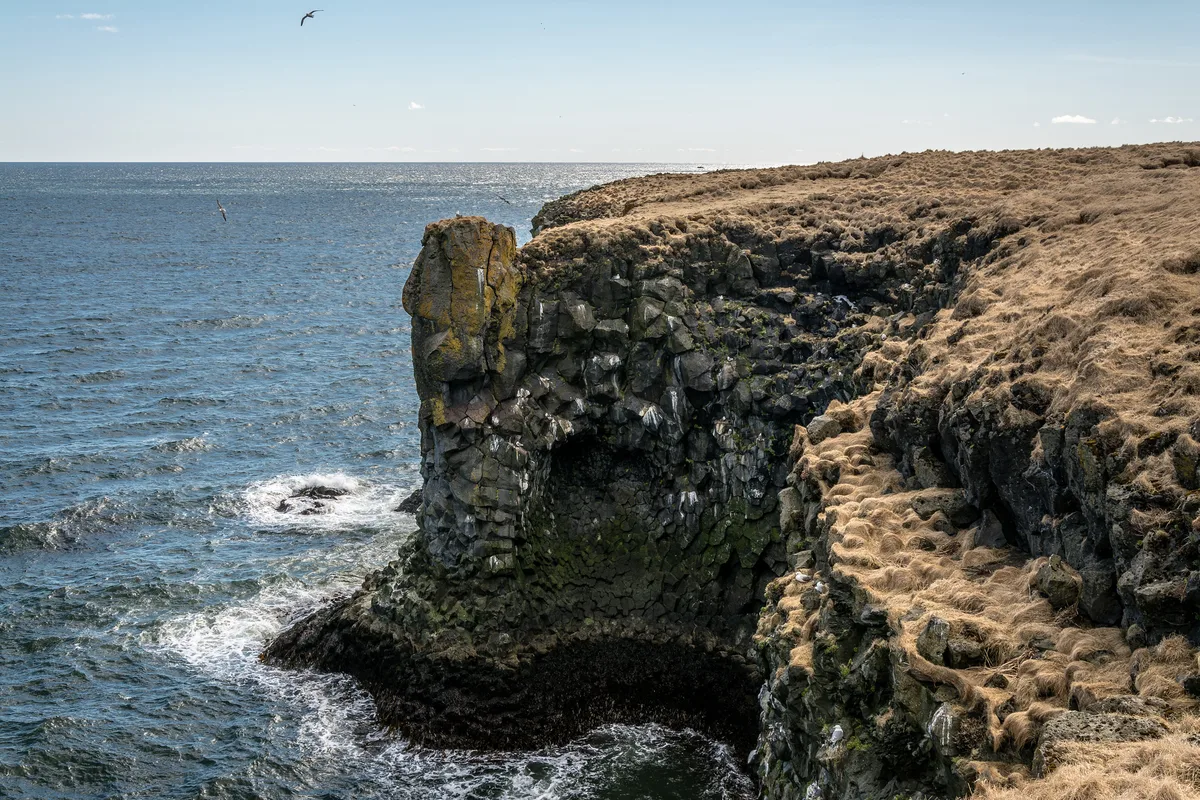
Arnarstapi is car-dependent. Drive Route 1 from Reykjavík, then turn onto Route 54, for roughly 2–2.5 hours. Public transport to the hamlet is limited, so check current bus options with Visit Snæfellsnes before relying on one. Once you arrive, the village is small enough to cover on foot. The coastal path is the only practical way between Arnarstapi and Hellnar without driving.
Pair the 2–2.5 hours of driving from Reykjavík with a 20–30 minute arch stop only if the day is loose. The 2–3 hour coastal walk needs its own window.
Where to stay and eat nearby
Accommodation and dining here are small in scale. In season, book ahead rather than turning up. Visit Iceland lists regional lodging and dining options. Hellnar has a café in a cove, which makes a natural coffee stop on the walk.
Is Arnarstapi right for you?
Some visitors will be happier elsewhere on the peninsula. If any of these apply, swap or shorten the plan.
- Vertigo: skip the cliff path and stay near the harbour, or head to Djúpalónssandur beach.
- Toddlers: unfenced edges and uneven lava make the path a poor fit.
- Strong wind: limit yourself to the arch and the statue.
- Limited time: do the 20–30 minute stop and move on to Kirkjufell mountain.
Combine it with nearby stops
Lóndrangar, a pair of basalt pinnacles rising from the Atlantic, pairs well with Arnarstapi. Djúpalónssandur and the Snæfellsjökull area are also close by, and Búðir lies along the south coast. Check drive times on a map when you plan the order. If you have a full day, Kirkjufell fits at the end of the loop. To see where this stop sits among Iceland's protected areas, read our guide to Iceland's national parks. You can also use the national parks map to plan the route.
Frequently Asked Questions
What is a famous fishing village in Iceland?
Arnarstapi is a small fishing hamlet on the south coast of the Snæfellsnes Peninsula. It has a rock-cut harbour, the Gatklettur arch, and a coastal path to Hellnar.
What is the nicest part of Iceland?
That depends on your trip, but the Snæfellsnes Peninsula packs sea arches, beaches, and mountains into one drive. Arnarstapi is one of its easiest stops for coastal scenery.
Notes for your next park visit
Optional updates to our national park guides.
Read next

Keep planning
Picked from the same area