
Silfra Fissure: Snorkel or Dive Between Tectonic Plates
Planning Silfra? Compare snorkeling vs diving, what the tour involves, who should skip it, cold-water realities and how to fit it into a Golden Circle day.
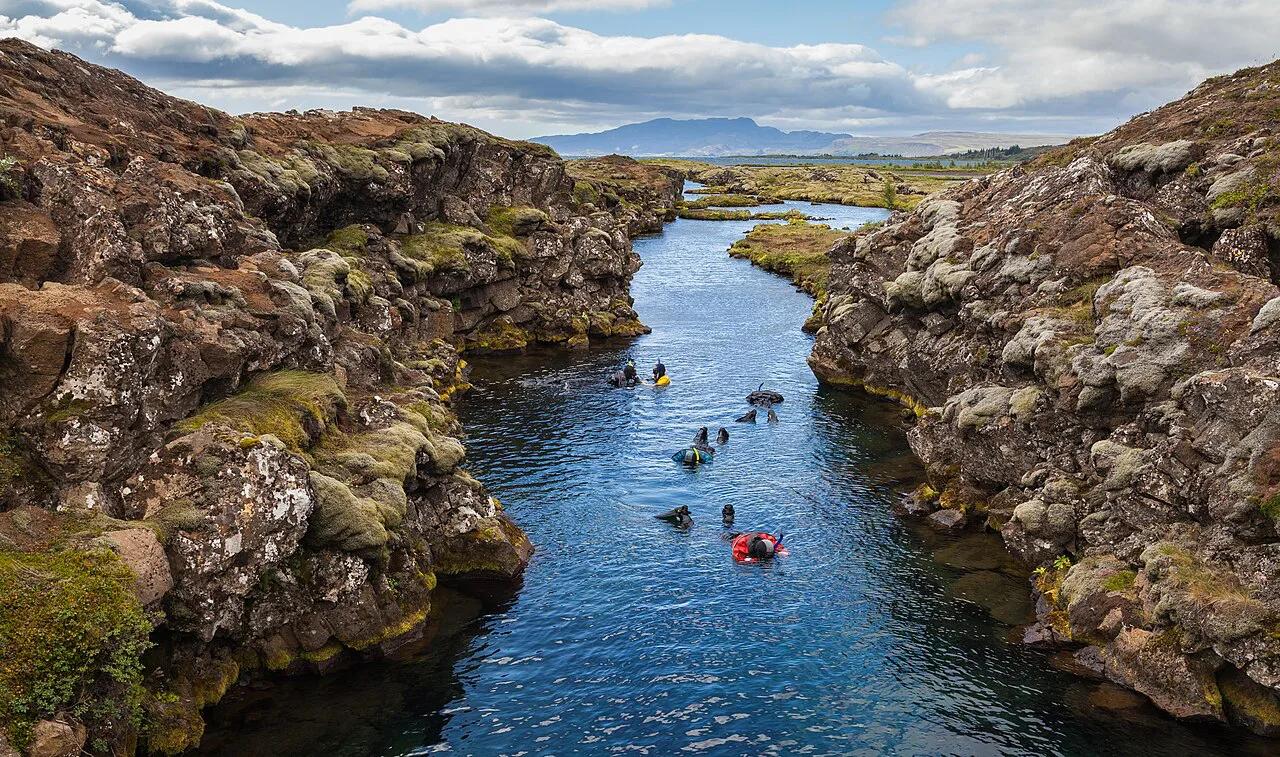
Last updated November 2026: the Silfra fissure is a water-filled rift in Lake Þingvallavatn, inside Þingvellir National Park, along the boundary between the North American and Eurasian plates. You can explore it only on guided dry-suit snorkel or dive tours. It suits confident swimmers who tolerate cold and want geology rather than marine life.
Featured image: Diego Delso, CC BY-SA 4.0, via Wikimedia Commons.
What the Silfra Fissure Is (and Isn't)
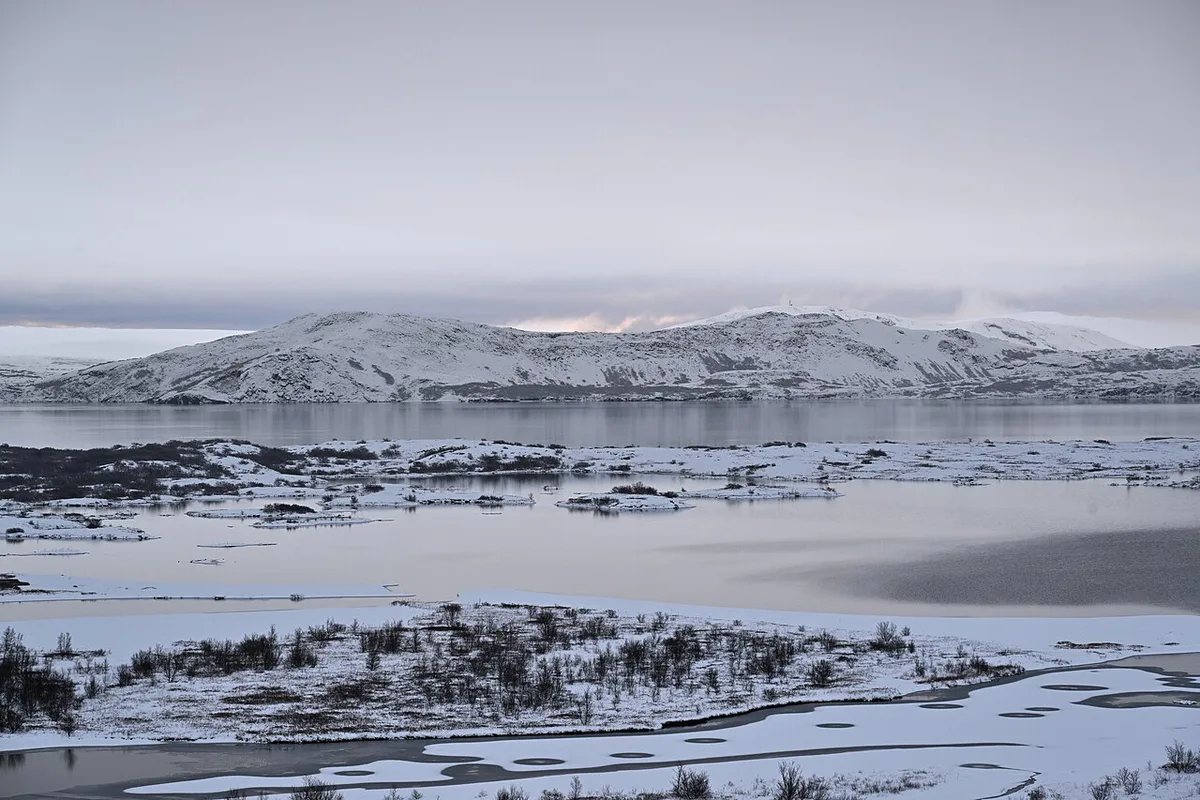
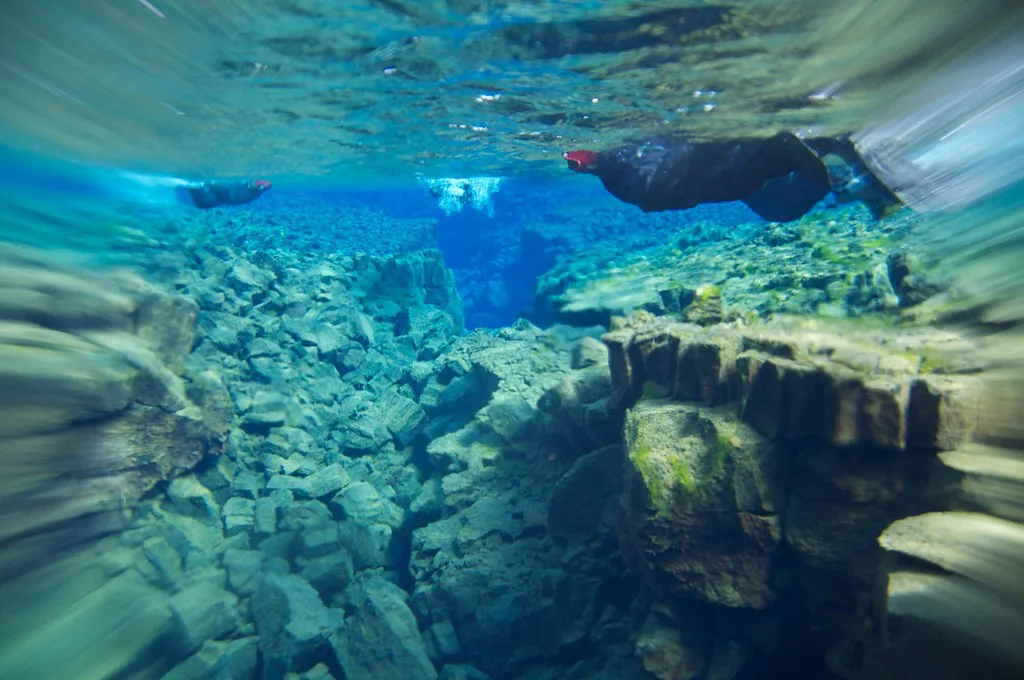
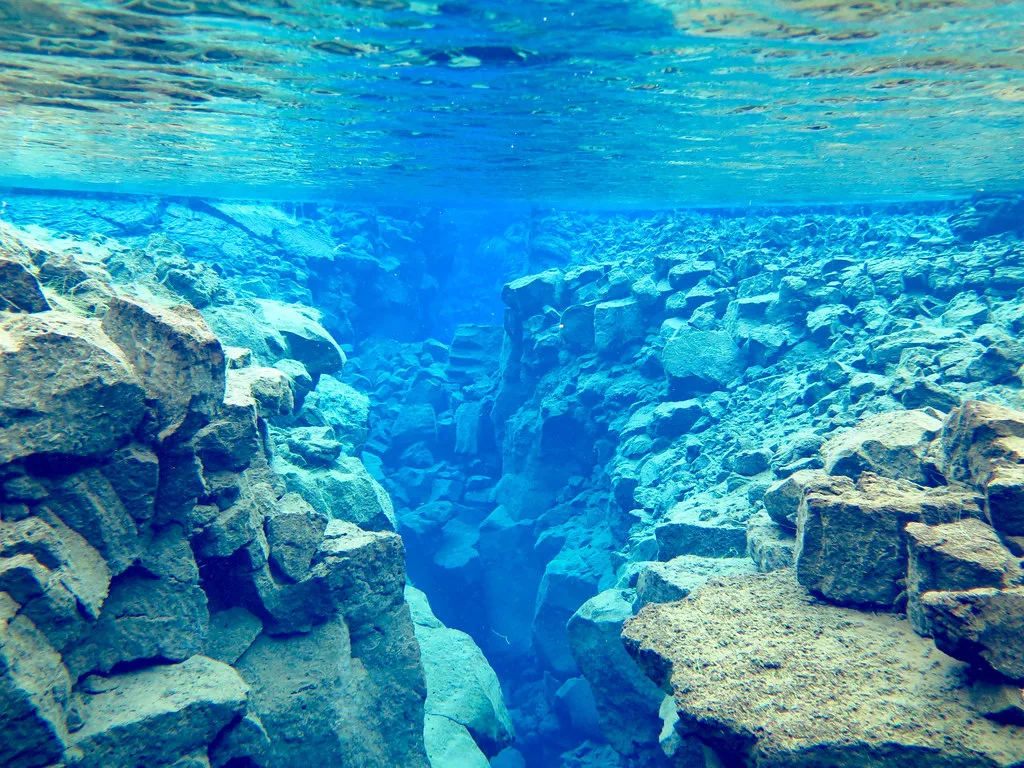
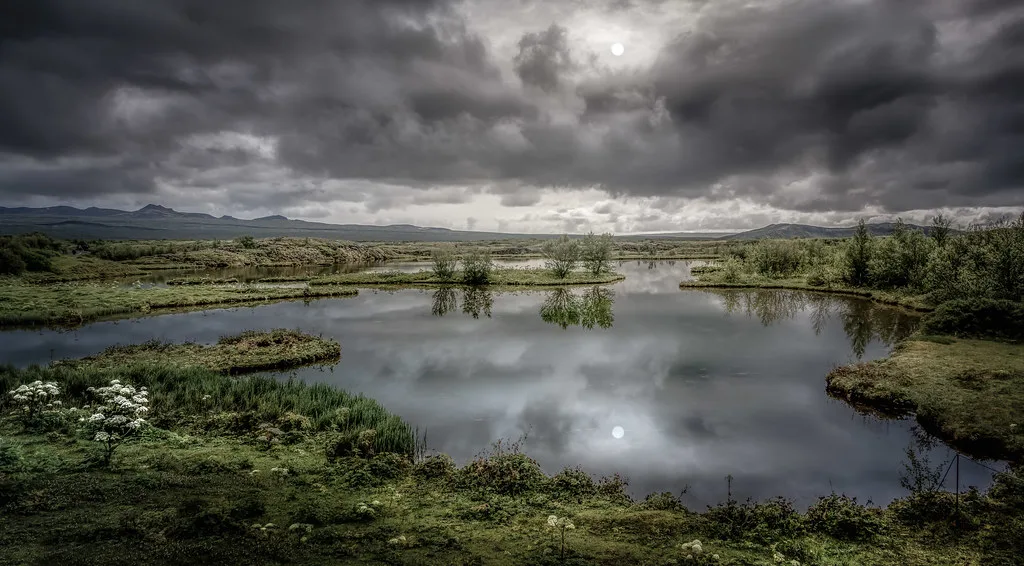
Silfra sits on a divergent boundary, where the two plates are slowly pulling apart. You never touch both plates at once in any simple sense. You float in a crack that the spreading has opened. Water from Lake Þingvallavatn filters through lava rock before it reaches the rift, and visibility is commonly reported at more than 100 m (about 330 ft). Water temperature stays at 2–4°C (about 36–39°F) year-round. Maximum depth is reported as 63 m (about 207 ft), but your operator sets the depth of the actual tour. This is geology, not marine life. Expect algae-covered rock and blue water instead of fish. Access and rules are set by the park, so read the official Þingvellir site before you book.
Snorkel or Dive? How to Choose
Both options use a dry suit and a guide. The main differences are certification, depth and how much of the fissure you cover. Operators publish their own requirements, so compare them before paying a deposit.
The fissure's listed maximum depth is 63 m (about 207 ft), but snorkelers float at the surface, so the depth matters mainly to divers.
| Factor | Snorkeling | Scuba diving |
|---|---|---|
| Certification | Usually no diving certificate; you must swim comfortably | Dry-suit diving certification and logged experience, set by the operator |
| Where you are | Floating at the surface, looking down | Below the surface, closer to the rock walls |
| What you see | Entrance, Cathedral and Lagoon sections, often with the full light show | The same sections from underwater, with more control over position |
| Time in the water | Short; cold sets the limit | Short as well; cold sets the limit |
| Best for | First-timers, non-divers and cold-tolerant swimmers | Certified divers who want a different angle |
What the Tour Looks Like
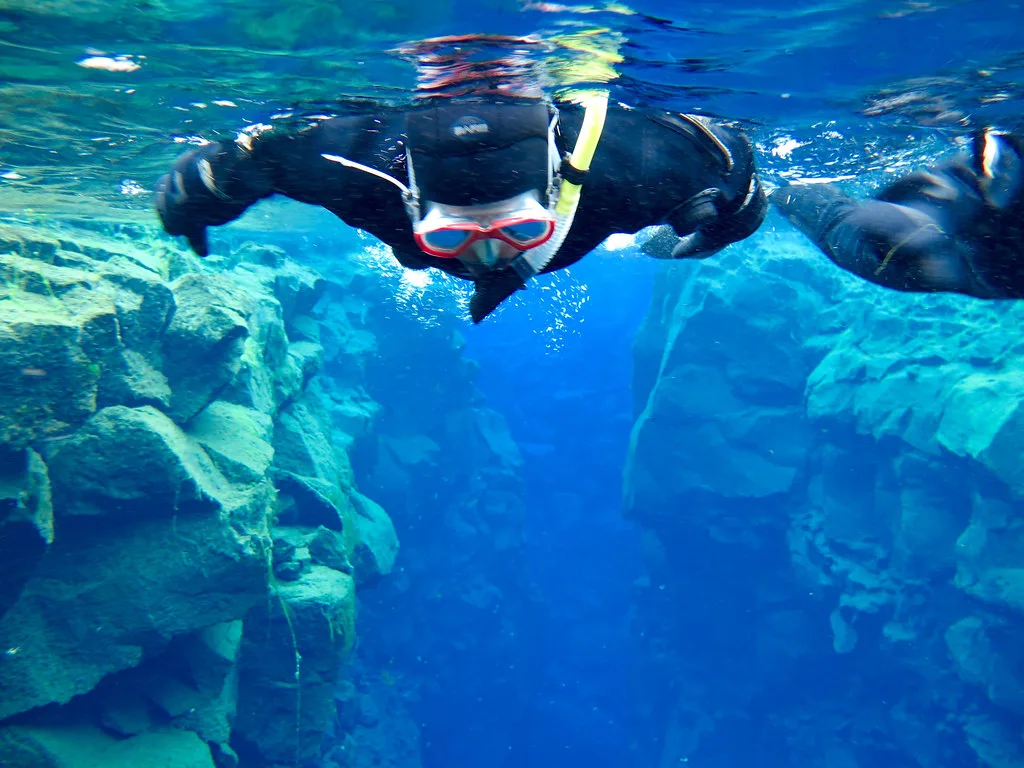
Most tours follow the same sequence. Section names and route details come from each operator, so treat this as a typical outline. Time in the water is short because of the cold. Commonly quoted figures run from 30 to 45 minutes.
- Meet-up: you gather at a set point, either at the site or at a pickup spot, and sign a health declaration.
- Briefing: the guide explains hand signals, the drift route and exit points.
- Suit-up: you pull on thermal layers, then a dry suit, hood and gloves.
- Entry: you step into the water from a wooden platform at the fissure's edge.
- Drift: the current carries you through Silfra Entrance, Silfra Cathedral and Silfra Lagoon.
- Exit and warm-up: you leave the water at the lagoon end and warm up with a hot drink.
Is Silfra Right for You? Who Should Skip It
Water at 2–4°C is cold even in a dry suit, and the experience asks more of your nerves than of your muscles. Be honest about these points before booking.
- Cold tolerance: your face and hands stay exposed, which is the hardest part for many people.
- Claustrophobia: the fissure narrows in places and a hood limits your peripheral view.
- Dry suit comfort: you must stay relaxed while wearing a snug suit that traps air.
- Swimming ability: snorkelers need to be comfortable in deep water with a guide nearby.
- Wildlife expectations: skip it if you want fish, coral or reef life.
Cost, Booking and What to Compare
Silfra prices vary by operator, season and package, and no single published rate covers every tour. Check each operator's own site for current prices in ISK. Compare tours by what the price includes. Summer slots fill early, so book before you fix your other Iceland dates. Browse Þingvellir tour options to shortlist providers.
- Gear: confirm the dry suit, undergarments, hood and gloves are included.
- Photos: ask whether a photo or video package is offered and what it costs.
- Pickup: check whether the price covers a Reykjavík transfer or only the site meeting point.
- Group size: smaller groups mean more time and space in the water.
- Requirements: compare certification and age limits before paying.
Getting There and Timing the Day
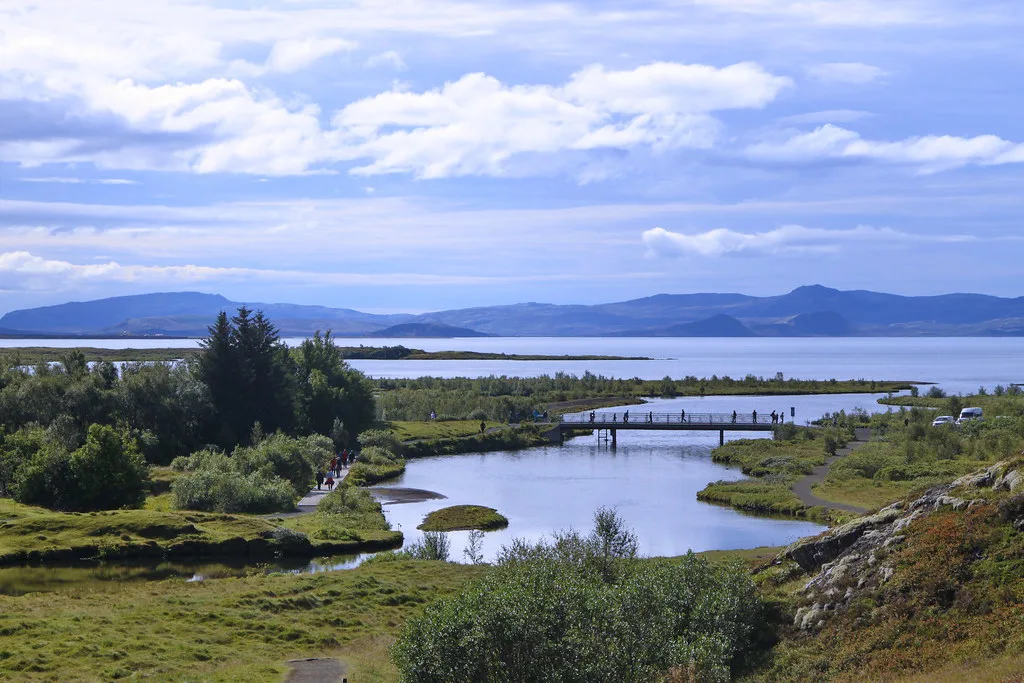
Silfra is about 45 minutes from Reykjavík by road and roughly an hour from Keflavík airport. Some operators offer pickup in Reykjavík, while others meet you at the site. Self-driving gives you freedom for the rest of the day. A transfer saves you from parking logistics and winter road stress. Read about Þingvellir parking before you arrive, and note where the visitor center sits. Use the park map to place the fissure relative to the other trails.
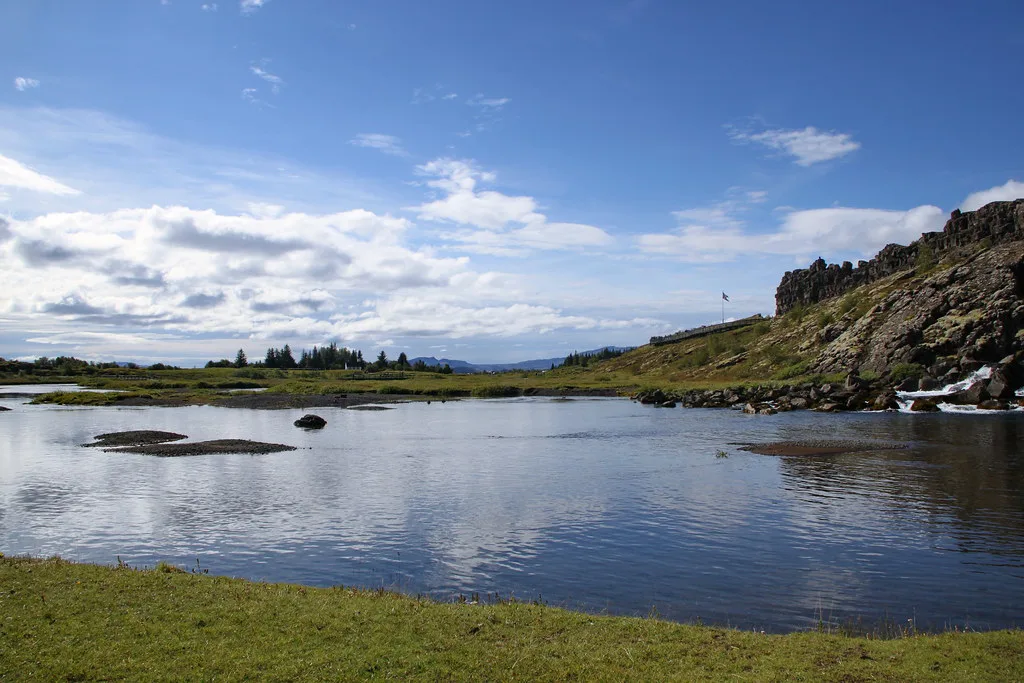
- Silfra only: book a morning slot, walk the park afterward and be back in Reykjavík by mid-afternoon.
- Silfra plus Þingvellir: add the rift valley walk and waterfall in the same day.
- Full Golden Circle: Geysir is reported at about 45 minutes beyond Þingvellir, and Gullfoss at about 60 minutes. That makes a long day after a cold-water morning.
Best Time to Go
Water temperature does not change much between seasons. The 2–4°C reading holds in July and in January. What changes is the surface: air temperature, daylight and wind. June to August brings the mildest conditions, and some operators run special midnight-sun slots around the solstice. Winter sessions are possible, though short daylight and cold air make the walk to the platform harder. Booking pressure is highest in summer. Check monthly Þingvellir weather before choosing a date. The Icelandic Met Office publishes current forecasts and warnings.
Not Getting in the Water? See Silfra and Þingvellir Above Ground
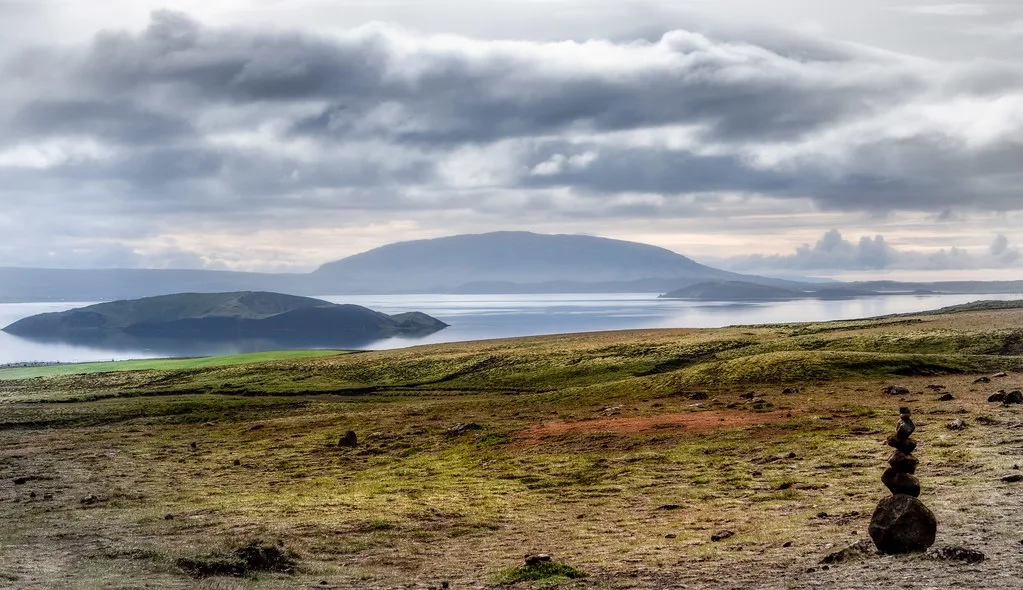
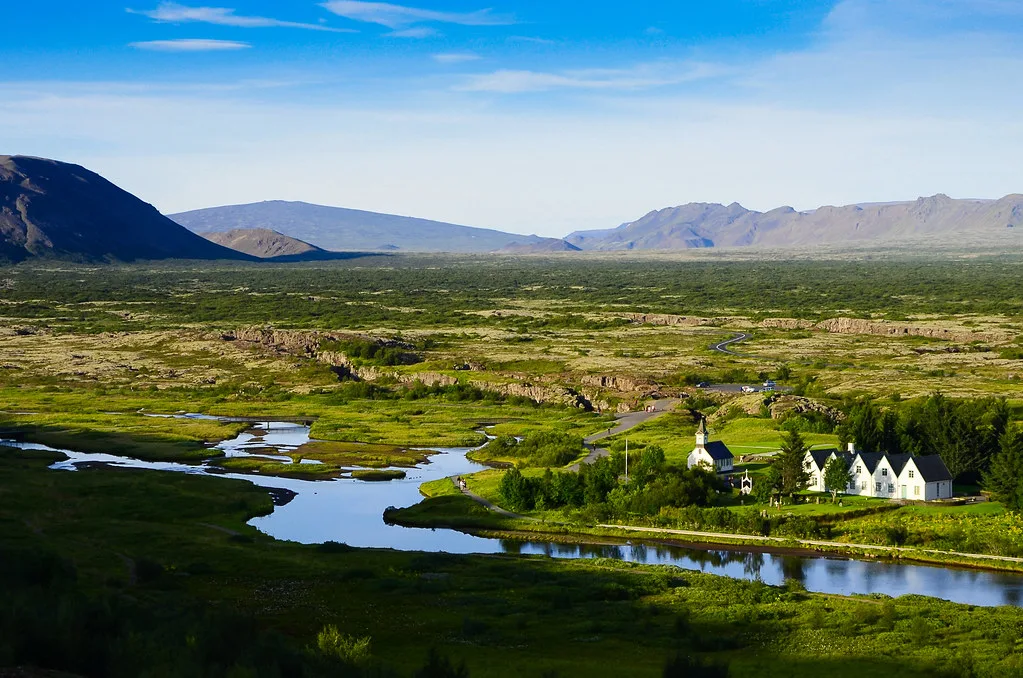
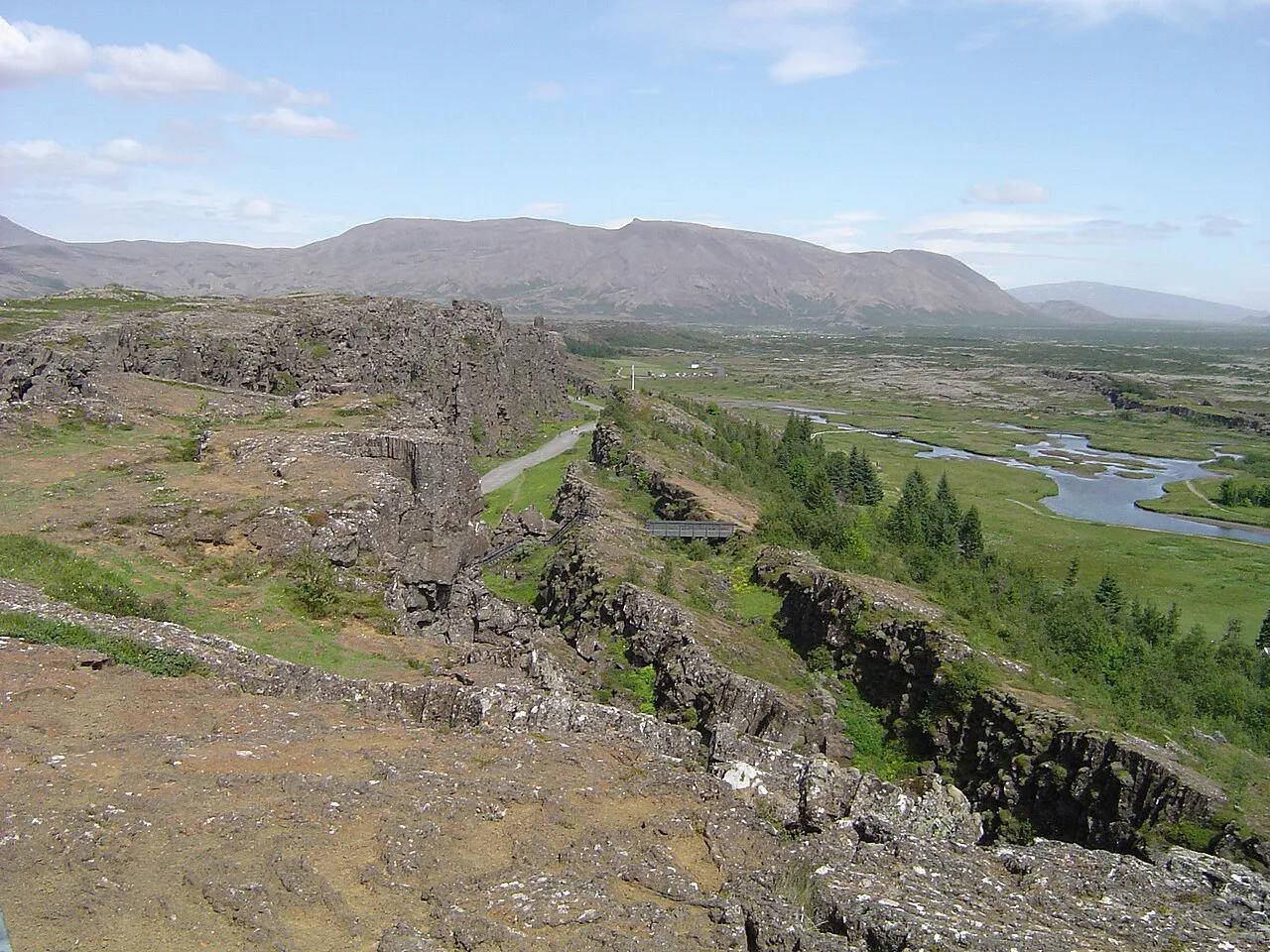
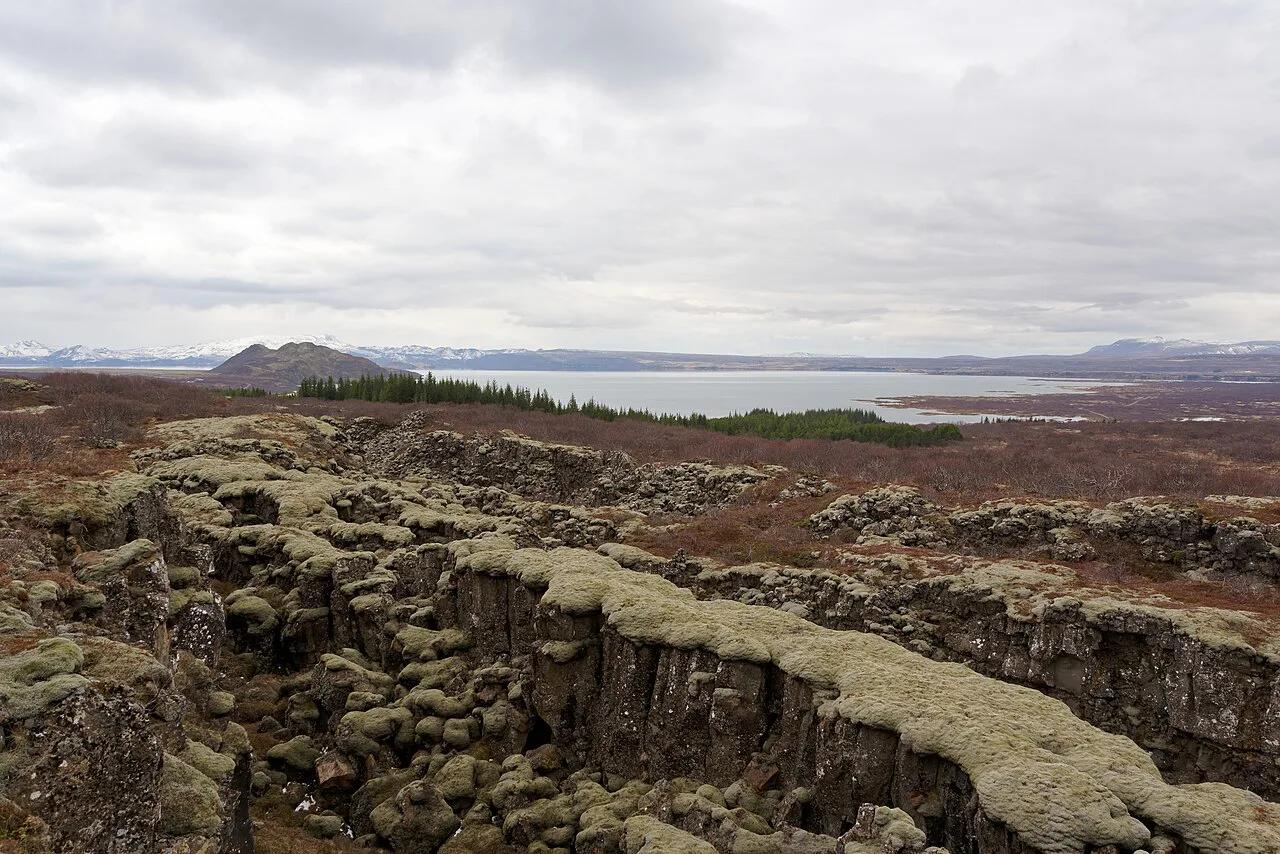
You can see the rift valley without a suit. Almannagjá is the main fault wall, and a path runs along its floor. Öxarárfoss drops over the cliff nearby. Stop at the visitor center for an overview, then walk between the fault walls. Ask your operator or the park about shore viewpoints for Silfra itself. For an overnight stay, see hotels near Þingvellir or camping at Þingvellir.
Safety, Rules and Photos
Silfra is guided-only. Operators require a dry suit, a briefing and a health declaration before you enter the water. Follow your guide's route and signals throughout. Read the Visit Iceland safety guidance for general travel conditions. Camera rules differ by operator, so ask whether you can bring your own camera or must buy a photo package. Do not touch or stand on the fissure walls, and never enter the water outside a guided session.
Frequently Asked Questions
Where can you touch two tectonic plates?
Silfra is often described that way, but the plates are drifting apart. You float in the gap between them rather than touching both at once. Dry-suit gloves and a guide's route keep you away from the rock in most sections.
How much does it cost to dive Silfra?
Prices differ by operator and by what the tour includes. Check each operator's own site for current ISK pricing. Compare gear, photos, pickup and group size, not only the headline price.
Notes for your next park visit
Optional updates to our national park guides.
Read next

Keep planning
Picked from the same area